English - EN
 繁體 - ZH-TW
 简体 - ZH-CN
 Español - ES
 日本語 - JA
 العربية - AR
 Русский - RU
 Français - FR


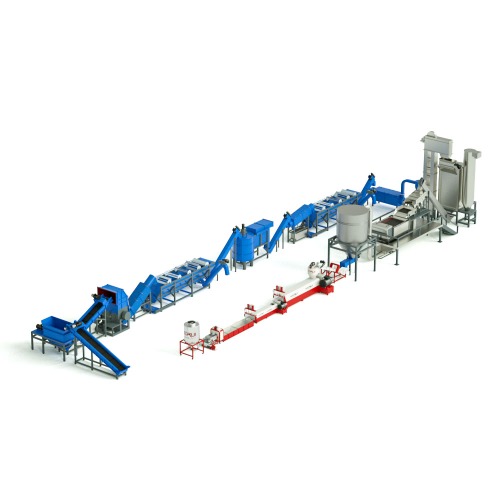
PP PE Bottle Washing Line with Modular Design
CATÉGORIES : Lignes de recyclage par application
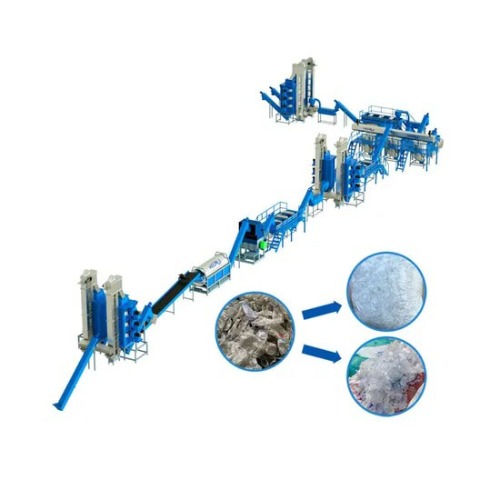
Transform post-consumer plastic bottles and containers into clean,high-quality recycled flakes with a high-performance PP PE bottle washing line engineered for efficient plastic recycling.This complete system is designed to process contaminated polypropylene (PP) and polyethylene (PE) materials,including HDPE bottles,PP containers,detergent bottles,household packaging,and other rigid plastic waste. Combining automated sorting,size reduction,friction washing,hot or cold cleaning,separation,drying,and material handling,the pp pe plastic bottle washing line delivers a reliable and efficient solution for recycling plants seeking to improve material recovery,reduce operating costs,and produce consistent recycled feedstock. Product Overview The pp pe recycling line is a complete recycling system that converts collected plastic bottles and rigid containers into clean,dry,and uniform plastic flakes.The equipment configuration can be adapted to accommodate different feedstock conditions,contamination levels,capacity requirements,and final product specifications. The PP PE crushing and washing line is suitable for recycling plastics contaminated with: - Dirt,dust,and sand - Labels and paper - Adhesives and glue residue - Oil and grease - Food residue - Detergent and chemical residue - Organic contaminants - Other lightweight and heavy impurities After processing,the recycled flakes can be used as raw material for plastic extrusion,injection molding,blow molding,sheet production,pipe manufacturing,and other plastic processing applications. Main Processing Stages 1. Feeding and Pre-Sorting The recycling process begins with a conveyor or belt feeder that delivers the collected PP and PE bottles into the PP PE Plastic bottle recycling machine line at a controlled rate.Manual or automated pre-sorting can be incorporated to remove unsuitable materials,oversized items,metals,PVC,and other contaminants before washing. 2. Label and Cap Separation A label remover or sorting section separates loose labels,sleeves,caps,and other lightweight materials from the primary plastic stream.This stage helps improve the purity of the finished flakes and reduces the load on downstream washing equipment. 3. Crushing and Size Reduction A heavy-duty plastic crusher machine or plastic recycling granulator machine reduces bottles and containers into uniform flakes.The cutting chamber and blade configuration are designed for continuous operation and efficient processing of rigid PP and PE materials. Consistent flake size improves washing performance,material separation,drying efficiency,and the quality of the final recycled product. 4.Friction Washing The friction washer uses high-speed mechanical agitation to scrub the plastic flakes and remove dirt,labels,adhesive,and other surface contaminants.The washing action helps achieve a higher level of cleanliness while supporting continuous material flow. 5. Hot Washing or Intensive Cleaning For heavily contaminated materials,the pp pe recycle washing line may include a hot washing tank or heated cleaning stage.Hot washing is particularly effective for removing oil,grease,food residue,detergent residue,and stubborn adhesive contamination. The cleaning temperature,residence time,and chemical dosing can be configured according to the properties of the feedstock and the requirements of the final recycled flakes. 6. Float-Sink Separation A float-sink separation tank uses density differences to separate PP and PE materials from heavier contaminants such as stones,glass,metal,and other unwanted particles. This stage can also assist in separating certain incompatible plastics,depending on the material composition and process design. 7. Rinsing and Dewatering After washing,the flakes pass through rinsing equipment to remove residual cleaning agents and suspended contaminants.A high-speed dewatering machine then removes most of the surface water before thermal drying. 8. Thermal Drying The drying system uses controlled hot air to reduce residual moisture and prepare the flakes for storage,transportation,or further processing.Efficient moisture removal helps prevent processing problems during extrusion,injection molding,and other downstream applications. 9. Final Separation and Storage Air separators,magnetic separators,and other sorting devices may be used in PP PE bottles recycling machine to remove remaining labels,dust,metal particles,and lightweight impurities.The clean flakes are then conveyed to a storage silo,collection station,or packaging system. Key Features - Designed specifically for PP and PE bottle recycling - Complete continuous washing and recycling process - Suitable for post-consumer and post-industrial plastic waste - Efficient removal of dirt,labels,adhesives,oil,grease,and residue - Heavy-duty crusher designed for rigid plastic materials - Friction washing system for intensive mechanical cleaning - Optional hot washing for highly contaminated feedstock - Float-sink separation for improved material purity - High-efficiency dewatering and thermal drying - Configurable process layout and equipment combination - Automated material conveying between processing stages - Stainless steel components available for wet-contact sections - Designed for stable operation and simplified maintenance - Compatible with additional sorting,pelletizing,and extrusion equipment - Suitable for small,medium,and large-scale plastic recycling plants Advantages for Plastic Recycling Plants Improved Recycled Material Quality The multi-stage washing and separation process produces clean PP and PE flakes with reduced levels of dirt,labels,moisture,and other contaminants.Higher-quality flakes can increase the value of recycled material and expand its potential applications. Efficient Contamination Removal The combination of crushing,friction washing,hot washing,rinsing,density separation,and drying provides effective treatment for a wide range of contaminated plastic bottles and containers. Flexible System Configuration The pp pe washing line can be configured based on the type of plastic waste,contamination level,required output,available facility space,and final product requirements.Optional equipment can be added to support color sorting,advanced purification,or pellet production. Reduced Manual Handling Automated conveyors and integrated processing equipment reduce the need for manual material transfer.This improves production consistency and can help lower labor requirements. Reliable Continuous Operation The high quality pp pe washing line is engineered for continuous material flow,making it suitable for commercial recycling operations that require stable throughput and dependable performance. Support for Circular Plastic Manufacturing By converting used PP and PE bottles into reusable flakes,the pp pe plastic recycling line helps reduce plastic waste,conserve virgin resources,and support a more sustainable materials supply chain. Typical Applications The recycled PP and PE flakes produced by this PP PE plastic bottles cleaner can be used in: - Plastic extrusion - Injection molding - Blow molding - Recycled plastic pallets - Crates and containers - Pipes and fittings - Plastic sheets and boards - Automotive plastic components - Household products - Construction materials - Non-food packaging products - Plastic pellet production The final application depends on the cleanliness,color,polymer composition,moisture level,and processing requirements of the recycled flakes. Recommended Feedstock The PP PE bottles recycling machine is suitable for processing: - HDPE milk and detergent bottles - PP household containers - Plastic shampoo and cosmetic bottles - Rigid PP and PE packaging - Post-consumer plastic bottles - Industrial plastic containers - Mixed rigid plastic waste - Production scrap and rejected plastic products For mixed-material feedstock,an appropriate sorting system is recommended to remove PVC,PET,metal,rubber,and other incompatible materials before the washing process. Customization Options Each plastic recycling plant has different raw material and production requirements.The pp pe plastic recycling machinery can be customized with: - Manual or automated sorting systems - Different crusher capacities and screen sizes Hot washing units - Chemical dosing and water circulation systems - Additional rinsing tanks - High-efficiency dewatering equipment - Thermal drying systems - Air classification and label separation - Magnetic and metal separation - Color sorting technology - Flake storage silos - Automatic weighing and packaging systems - Water filtration and recycling equipment - PP PE pelletizing lines for further processing Conclusion The high-performance Polypropylene Polyethylene washer provides a complete and dependable solution for plastic recycling plants processing contaminated PP and PE bottles and rigid containers.Through efficient size reduction,intensive washing,density separation,drying,and impurity removal,the Polypropylene Polyethylene washer produces clean and reusable recycled flakes for a wide range of manufacturing applications. With a modular design,flexible configuration,and focus on reliable continuous operation,this pp pe plastic recycling plant is an ideal choice for businesses seeking to increase plastic recovery,improve recycled material quality,and build an efficient,sustainable plastic recycling operation. PP PE Bottle Washing Line with Modular Design Flexible Configuration Compatibility Automation:https://www.petrecyclingmachinery.com/PP-PE-Bottle-Washing-Line-with-Modular-Design-Flexible-Configuration-Compatibility-Automation-pd585697648.html Plastic Recycling Machines & Solutions - Haorui Machinery:https://www.petrecyclingmachinery.com/products.html PET Bottle Recycling Machine & Plastic Crusher - Haorui Machinery:https://www.petrecyclingmachinery.com/

Plastic Sheet Recycling Equipment with High-Output
CATÉGORIES : Lignes de recyclage par application
Automatic 500–5000 kg/h PET Bottle Recycled Plastic Sheet Machine The automatic 500–5000 kg/h sheet grade PET bottle washing recycling line is an integrated recycling and sheet extrusion system designed to convert post-consumer and post-industrial PET bottles into high-quality recycled plastic sheets.With configurable production capacities from 500 to 5,000 kg/h,the sheet & bottle cleaning system is suitable for small,medium,and large-scale plastic recycling operations. The complete sheet grade PET bottle washing line combines PET bottle processing,material cleaning,drying,conveying,extrusion,filtration,sheet forming,cooling,trimming,and automatic winding or stacking.It provides an efficient solution for recovering PET waste and transforming it into reusable sheet material for packaging,thermoforming,construction,and industrial applications. Key Features High-Capacity PET Recycling - Production capacity options from 500 to 5,000 kg/h - Designed for continuous, automatic operation - Suitable for PET bottles,flakes,and compatible recycled PET feedstock - Configurable for different raw material conditions and product specifications - Supports high-volume plastic recycling and sheet manufacturing Integrated Processing System The sheet grade PET bottle recycling line can be configured as a complete PET recycling and sheet extrusion line,including: 1. Bottle Sorting and Feeding Removes unsuitable materials and delivers PET bottles to the processing system at a controlled rate. 2. Label and Cap Separation Separates labels,caps,rings,and other non-PET components to improve feedstock purity. 3. Bottle Crushing and Flake Production A high-performance crusher or granulator reduces PET bottles into uniform flakes for efficient washing and processing. 4. Cold and Hot Washing Washing systems remove dirt,dust,beverage residue,oil,adhesives,and other contaminants from the PET flakes. 5. Friction Washing and Rinsing High-speed friction washers and rinse tanks further improve flake cleanliness and prepare the material for drying. 6. Dewatering and Thermal Drying Mechanical dewatering and hot-air drying reduce residual moisture before extrusion.Proper moisture control helps minimize hydrolysis and supports stable sheet quality. 7. Extrusion and Plasticizing The dried PET material is melted and homogenized in a specially configured extrusion system.Depending on the application,the system may process washed flakes directly or use recycled PET pellets. 8. Melt Filtration Continuous or automatic melt filtration removes fine impurities,unmelted particles,and residual contaminants from the molten PET. 9. Sheet Die and Forming A precision flat sheet die distributes the melt evenly across the sheet width,supporting consistent thickness and surface quality. 10. Calendering and Cooling Polishing rolls or a three-roll calender system cool and shape the sheet while helping control thickness,flatness,gloss,and transparency. 11. Edge Trimming and Waste Recycling Automatic edge trimmers remove excess material.Trim waste can be returned to the recycling process,depending on the production configuration. 12. Automatic Winding or Sheet Stacking Finished PET sheet can be produced in rolls or cut and stacked into sheets according to customer requirements. Product Advantages Efficient Waste-to-Product Conversion The PET sheet & bottle washing line converts discarded PET bottles into usable recycled sheets,helping reduce landfill waste and lower dependence on virgin plastic materials. Stable Sheet Quality Advanced extrusion,melt filtration,and calendering systems help deliver: - Uniform sheet thickness - Consistent width and flatness - Smooth surface finish - Reliable mechanical strength - Improved transparency or opacity control - Reduced contamination and gel formation - Stable production output Automatic Operation The sheet grade PET bottle recycling machine uses centralized control,automatic feeding,temperature regulation,pressure monitoring,and synchronized conveying to reduce manual intervention.An integrated PLC and touchscreen control system allows operators to monitor key production conditions and adjust operating parameters efficiently. Flexible Production Configuration The pet sheet machine can be customized for different: - Production capacities - Sheet widths and thicknesses - PET feedstock conditions - Product transparency requirements - Roll or sheet output formats - Degree of automation - Downstream thermoforming or packaging applications Energy-Conscious Design The sheet grade PET bottle washing machine can be configured with energy-efficient motors,optimized heating zones,variable-frequency drives,insulated barrels,and automatic temperature control.These features help reduce unnecessary energy consumption while maintaining stable processing conditions. Typical Applications for Recycled PET Sheet The recycled PET sheets produced by this recycled plastic sheet machine can be used in a variety of industries,including: - Thermoformed food packaging - Blister packaging - Clamshell packaging - Electronic product packaging - Cosmetic and medical packaging - Industrial trays - Protective packaging - Stationery products - Decorative panels - Construction and insulation components - Agricultural and horticultural products - General-purpose plastic sheet applications For food-contact,pharmaceutical,or other regulated applications,the recycled material and complete processing system must be designed and qualified according to the applicable local regulations and end-use requirements. Control and Safety Functions The sheet & bottle recycling machine can include multiple systems for reliable and safe operation: - Centralized PLC control - Touchscreen monitoring interface - Automatic temperature control - Extruder pressure monitoring - Melt temperature monitoring - Overload and overheat protection - Emergency-stop switches - Motor and pump protection - Automatic fault alarms - Water-level and flow monitoring - Synchronized speed control for conveyors,rolls,and winders Recommended Feedstock Preparation For optimal sheet quality and stable operation,the PET feedstock should be properly sorted,washed,dried,and separated from PVC,PE,PP,metals,paper,and other foreign materials.Material preparation is especially important when processing post-consumer PET bottles,as contamination and moisture can affect extrusion stability,product appearance,and mechanical performance. Ideal for Plastic Recycling Businesses The automatic 500–5000 kg/h recycling plastic sheet making plants are designed for recycling plants,packaging manufacturers,plastic converters,and industrial material producers seeking to transform PET waste into marketable sheet products.Its modular design allows the sheet grade PET bottle cleaning system to be configured for different investment levels,production targets,product requirements,and factory layouts. By combining high-throughput PET recycling with sheet extrusion technology,this plastic sheet recycle machine provides an efficient and scalable solution for plastic waste recovery and the production of value-added recycled materials. Plastic Sheet Recycling Equipment with Energy-Conscious Design Safety Function High-Output Automation:https://www.petrecyclingmachinery.com/Plastic-Sheet-Recycling-Equipment-with-Energy-Conscious-Design-Safety-Function-High-Output-Automation-pd513809248.html PET Bottle Washing Line Manufacturer - Haorui Machinery:https://www.petrecyclingmachinery.com/PET-Bottle-Washing-Line-pl43660357.html Plastic Recycling Machines & Solutions - Haorui Machinery:https://www.petrecyclingmachinery.com/products.html PET Bottle Recycling Machine & Plastic Crusher - Haorui Machinery:https://www.petrecyclingmachinery.com/
PP PE Film Cleaner with High Output
CATÉGORIES : Lignes de lavage et de tri
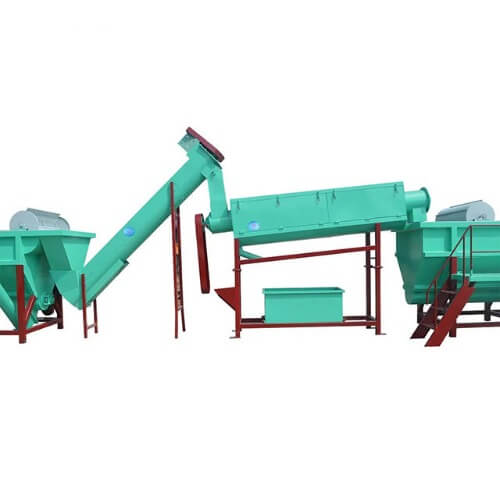
Product Overview The 1000 kg/h PP PE film woven bag washer is an integrated plastic recycling solution designed for cleaning and preparing post-consumer and post-industrial polyethylene (PE) and polypropylene (PP) films for reuse.With a nominal processing capacity of up to 1,000 kg per hour—depending on material condition,contamination level,moisture content,and configuration—the system is suitable for recycling facilities,plastic processors,packaging manufacturers,and waste management operations. The woven bag recycling washing line removes dirt,sand,organic residues,labels,paper,and other contaminants from waste plastic films.After washing and drying,the processed material can be sent to a pelletizing line or used in other downstream recycling applications. Suitable Materials This pe film washing line is designed for recycling a wide range of flexible plastic waste,including: - Post-consumer PE film - Post-industrial PE film - LDPE and LLDPE agricultural film - Stretch film and packaging film - Shopping bags and plastic bags - PP woven bags - PP raffia and woven film - Mixed plastic film with compatible PE and PP content - Film scraps from packaging and manufacturing processes Material with excessive non-plastic content may require additional sorting or pre-treatment before entering the pp pe film washing line. Main Recycling Process The complete film woven bag cleaning system can be configured according to the material characteristics and required output quality.A typical process includes: 1. Material Feeding Waste film is loaded into the feeding system,which provides a continuous and controlled supply to the pp pe film washing system. 2.Shredding The film is cut into smaller pieces to increase the surface area and improve the effectiveness of washing. 3.High-Speed Friction Cleaning A friction washer provides intensive cleaning through high-speed rotor movement and controlled water circulation. 4. Float-Sink Separation The washing tank separates floating plastic film from heavier materials such as stones,glass,metal,and other dense contaminants. 5.Rinsing Clean water is used to remove remaining detergent,suspended dirt,and fine particles. 6.Dewatering and Drying A centrifugal dewatering machine and thermal or air drying system reduce moisture before storage or pelletizing. Key Features High Processing Capacity With a nominal capacity of up to 1,000 kg/h,the pe film production line is suitable for medium-and large-scale plastic recycling operations.Actual throughput depends on the type of film,contamination level,moisture content,feeding method,and selected equipment configuration. Designed for PP and PE Film Recycling The pp film washing line is engineered for flexible plastic materials that are difficult to process using standard rigid-plastic washing equipment.Specialized conveying,shredding,washing,dewatering,and drying components help handle lightweight films efficiently. Efficient Contaminant Removal The washing process is designed to remove common contaminants,including: - Dirt and dust - Sand and soil - Food and organic residues - Paper and labels - Oil and grease residues - Small stones and other heavy particles - Loose foreign materials For heavily contaminated film,additional hot washing,chemical dosing,or advanced sorting equipment may be recommended. Modular System Configuration The polypropylene polyethylene bag recycler can be customized based on the incoming material and required output quality.Optional equipment may include: - Bale opener - Magnetic separator - Manual or optical sorting station - Pre-shredder - Metal detector - Hot washing tank - Additional friction washer - Water treatment and recycling system - Film compactor - Thermal dryer - Pelletizing line Reduced Moisture Content The dewatering and drying section is designed to remove excess water from washed film before storage or extrusion.Lower moisture content helps improve material handling and supports more stable operation of downstream plastic recycling granulator machine. Continuous Operation The pp woven bag recycling line is designed for continuous feeding and processing,helping reduce manual handling and improve production efficiency compared with small-batch washing methods. Water Recycling Capability A water circulation and filtration system can be integrated to reduce fresh-water consumption.Settling tanks,filtration units,and sludge-removal equipment help maintain washing performance and support more sustainable operation. Durable Construction The major equipment can be manufactured with wear-resistant materials and reinforced components to withstand continuous operation and abrasive contaminants commonly found in post-consumer plastic waste. Easy Operation and Maintenance The pp woven bag recycling machine can be equipped with a centralized electrical control panel,safety devices,emergency-stop switches,and automatic or semi-automatic controls.Accessible inspection points and replaceable wear parts help simplify maintenance. Benefits for Plastic Recycling - Converts low-value waste film into reusable plastic material - Supports the recycling of PE and PP packaging and agricultural film - Improves the cleanliness and quality of recycled feedstock - Reduces the volume of plastic waste sent to landfills or incineration - Provides a scalable solution for commercial recycling operations - Can be connected to a plastic pelletizing line - Helps improve labor efficiency through continuous automated processing - Offers a cost-effective alternative to purchasing new plastic raw materials Typical Output Applications After washing,drying,and optional pelletizing,the recycled material may be used in the production of: - Garbage bags - Shopping bags - Packaging film - Agricultural film - Plastic liners - Recycled plastic bags - Injection-molded products - Extruded plastic products - Plastic boards and profiles - Other non-food-contact plastic products The final application depends on the material composition,sorting accuracy,washing quality,and downstream processing conditions. Competitive Price and Customized Configuration This 1000 kg/h PP PE film cleaner is available with a competitive price based on the selected equipment configuration,automation level,water-treatment requirements,and optional components.A customized quotation can be prepared according to: - Raw material type - Initial contamination level - Required production capacity - Desired output moisture - Required washing quality - Available factory space - Local power supply - Water availability and recycling requirements - Whether pelletizing equipment is required Why Choose This Woven Bag Washing Line? The 1000 kg/h film woven bag cleaning system provides a practical solution for businesses seeking to expand their plastic recycling capacity.Its modular design allows the line to be adapted to different types of film waste,while the combination of mechanical separation,friction washing,float-sink separation,dewatering,and drying helps produce cleaner and more manageable recycled material. For a complete quotation,layout,equipment list,and recommended configuration,provide details about your raw materials,contamination level,required output,and local power supply. PP PE Film Cleaner with Durable Construction Modular Design Configuration High Output:https://www.petrecyclingmachinery.com/PP-PE-Film-Cleaner-with-Durable-Construction-Modular-Design-Configuration-High-Output-pd548555058.html Plastic Recycling Machines & Solutions - Haorui Machinery:https://www.petrecyclingmachinery.com/products.html PET Bottle Recycling Machine & Plastic Crusher - Haorui Machinery:https://www.petrecyclingmachinery.com/

Machine de recyclage de plastique compacteur Cutter: Repro-Flex
CATÉGORIES : Lignes de recyclage par application
La conception de la machine de recyclage permet de traiter jusqu'à 95 % des matériaux recyclés imprimés en surface, ce qui en fait un choix idéal pour une économie circulaire 1. Filtration avant dégazage : une étape clé pour assurer la qualité des granulés recyclés Cette machine est spécialement conçue pour traiter les matériaux recyclés fortement imprimés, permettant de recycler et de granuler les matériaux recyclés fortement imprimés. Avant le processus de dégazage, nous utilisons un système de filtration avancé pour éliminer efficacement les impuretés et les contaminants. Cette conception garantit un excellent effet de dégazage, améliorant considérablement la pureté et la qualité des granulés recyclés, vous permettant de produire des produits recyclés de meilleure qualité et de plus grande valeur. 2. Triple dégazage : élimine complètement l'encre et l'humidité pour une qualité exceptionnelle Pour assurer un effet de dégazage optimal, notre machine de recyclage utilise une technologie de triple dégazage de pointe. En plus d'un système de double dégazage configuré dans la première extrudeuse, une section de ventilation spécialement conçue (située au point de connexion des première et deuxième extrudeuses) sert de troisième section de dégazage. Cette conception de triple dégazage peut éliminer plus efficacement l'encre, les solvants résiduels et l'humidité excessive des matériaux recyclés, réduisant considérablement les odeurs et la teneur en composés organiques volatils (COV) des granulés recyclés, offrant ainsi des matériaux recyclés plus sûrs et plus écologiques. 3. Conception de coupe améliorée : permet une alimentation rapide et stable, augmentant la productivité Nous améliorons continuellement la technologie de coupe. La conception de coupe améliorée excelle dans les applications de recyclage de films BOPP imprimés. L'unité de broyage possède non seulement une capacité de broyage efficace, mais utilise également intelligemment la chaleur générée pendant le processus de fonctionnement pour préchauffer le matériau plastique, le faisant se contracter. L'étape de contraction améliore considérablement la stabilité de l'alimentation de l'unité de broyage à la section d'extrusion, assurant une alimentation uniforme et continue. Une alimentation très stable est essentielle pour maintenir la stabilité de la capacité de la machine, permettant à votre ligne de production de fonctionner de manière efficace à tout moment. Champ d'application des déchets de recyclage plastique : large application, création d'une valeur illimitée Les granulés de plastique recyclé produits par Repro-Flex peuvent être immédiatement utilisés dans la chaîne de production pour une nouvelle production, avec un large éventail d'applications. Les applications les plus courantes comprennent les machines de soufflage de sacs et les extrudeuses de tuyaux, utilisées pour produire divers produits en plastique, tels que les sacs poubelles, les films d'emballage, les films agricoles et les matériaux de construction, etc. Nos solutions de recyclage peuvent vous aider à réaliser le recyclage des ressources, à réduire les coûts de production et à améliorer la compétitivité de vos produits sur le marché. 1. Recyclage unique de matériaux plastiques propres - Déchets de production en usine de produits plastiques : réduction des coûts, augmentation de la valeur Les usines de production de produits en plastique (telles que les usines de soufflage de sacs, les usines de fabrication de sacs et les imprimeries) produisent en moyenne environ 5 % de déchets de leur production totale. Dans un contexte d'augmentation continue des prix du pétrole et des nouveaux matériaux, l'importance du recyclage des déchets plastiques en usine devient de plus en plus évidente. En utilisant la machine de recyclage Repro-Flex, vous pouvez recycler et réutiliser les déchets générés pendant le processus de production (tels que les produits défectueux de rouleaux de film, les chutes d'oreilles coupées pendant le processus de fabrication de sacs), réduisant considérablement les coûts d'achat de nouveaux matériaux. La qualité des matériaux recyclés une fois recyclés peut atteindre jusqu'à 98 % de celle des nouveaux matériaux. De nombreux fabricants ont choisi d'utiliser des déchets recyclés une fois recyclés pour produire des produits de haute qualité, dont la qualité est presque identique à celle des produits fabriqués avec de nouveaux matériaux. Cette méthode permet non seulement d'économiser sur les coûts des matières premières, mais également d'augmenter la valeur marchande des produits, de se conformer aux tendances environnementales et d'améliorer l'image de l'entreprise. 2. Déchets recyclés secondaires - Déchets lavés à l'eau, particules de plastique contenant des impuretés mineures : élargir les applications, créer des revenus Afin de répondre aux besoins des différents clients, la machine Repro-Flex peut également recycler de manière flexible les déchets lavés à l'eau (tels que les films plastiques mis au rebut, les films agricoles, les films de couverture pour les projets de construction, etc.). La chaleur générée par la rotation pendant le processus de broyage Repro-Flex peut être utilisée pour chauffer les déchets lavés à l'eau et éliminer l'excès d'humidité dans le matériau, réduisant ainsi efficacement la consommation d'énergie du traitement ultérieur. Dans la partie extrudeuse, les doubles orifices de dégazage peuvent à nouveau libérer l'humidité et l'encre d'impression, purifiant davantage les particules recyclées. Les granulés de plastique produits à partir de matières premières lavées à l'eau sont principalement utilisés pour une nouvelle production, comme la fabrication de sacs poubelles, de films techniques, de films plastiques pour les tissus de couverture et la production de tuyaux d'eau, etc. La machine Repro-Flex peut également être équipée d'un doseur de mélange maître/additif, ce qui vous permet d'ajuster la couleur des particules recyclées en fonction de vos besoins, d'élargir le champ d'application et de créer davantage de revenus. Avantages de la machine de recyclage Repro-Flex : efficace, fiable, économique Machine de recyclage à conception trois en un : économise de l'espace, réduit les coûts La machine de recyclage Repro-Flex intègre trois unités en une : le broyage, l'extrusion et la granulation, réalisant ainsi une solution de recyclage unique. Les matériaux recyclés peuvent être directement envoyés à la machine pour être transformés, ce qui permet d'obtenir des granulés de plastique recyclé de haute qualité. Cette conception intégrée élimine le besoin de main-d'œuvre, de surface d'usine et de consommation d'électricité nécessaires au broyage, à l'extrusion et à la granulation séparés, réduisant considérablement vos coûts d'exploitation et améliorant l'efficacité de la production. Méthode de fonctionnement pratique : simplifie le processus, améliore l'efficacité Les matériaux recyclés peuvent être directement placés sur le convoyeur, qui les envoie automatiquement à l'unité de broyage. La quantité d'alimentation du convoyeur est contrôlée par l'ampèremètre, ce qui permet une alimentation quantitative précise, assurant la stabilité et l'uniformité de l'alimentation. Le cylindre de broyage peut non seulement couper efficacement le film plastique, mais également comprimer les fragments de plastique broyés pendant le processus de coupe, leur donnant du poids, et utiliser la force centrifuge générée par la rotation de la coupe pour envoyer directement le matériau plastique dans l'extrudeuse pour la fusion. Le matériau fondu extrudé peut être immédiatement granulé et refroidi par l'unité de coupe de la filière, et le matériau recyclé produit peut être directement utilisé dans la chaîne de production pour une nouvelle production, simplifiant le processus de fonctionnement et améliorant l'efficacité de la production. Haute efficacité, haute productivité : alimentation stable, assure la production La conception combinant les unités de broyage et d'extrusion permet de s'assurer que les matériaux recyclés introduits sont complètement broyés et alimentés en douceur dans l'extrudeuse. Cette conception d'alimentation ininterrompue peut fournir une quantité d'alimentation stable, permettant à l'extrudeuse d'extruder quantitativement le matériau plastique. Étant donné que l'alimentation et l'extrusion sont stables, la machine peut également produire de manière stable des granulés recyclés de haute qualité, garantissant que votre chaîne de production peut fonctionner de manière continue et efficace.
chain extender
CATÉGORIES : Additifs
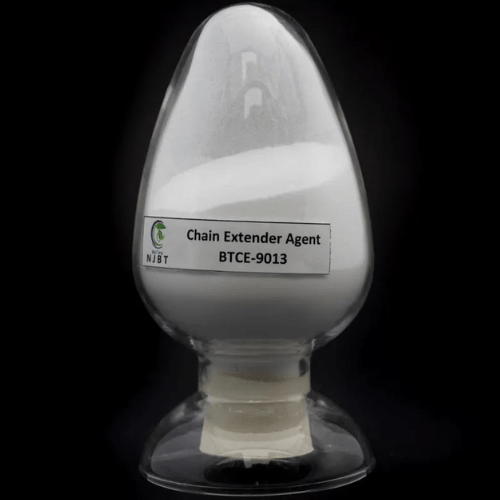
BTCE-9013 is a polymeric epoxy functionalized chain extender. The epoxy functional groups in its structure can react with the terminal carboxyl, hydroxyl, and amino groups in long-chain resin molecules to extend the polymer chain, thereby improving the resin's mechanical properties, intrinsic viscosity, and inhibiting polymer hydrolysis. It can be used in food contact materials. BTCE-9013 is generally co-extruded with modified resins using twin-screw or single-screw extruders. The recommended dosage for bio-based and biodegradable plastics such as polybutylene adipate/terephthalate (PBAT), polylactic acid (PLA), polybutylene succinate (PBS), polymethyl ethylene carbonate (PPC), and polyhydroxyalkanoates (PHAs) is 0.2-0.8 phr. The recommended dosage for condensation-based recycled plastics such as polyamide (PA), polybutylene terephthalate (PBT), polycarbonate (PC), and polyethylene terephthalate (PET) is 0.2-1.5 phr. The specific dosage depends on the number of active functional groups in the resin and the performance requirements of the product.
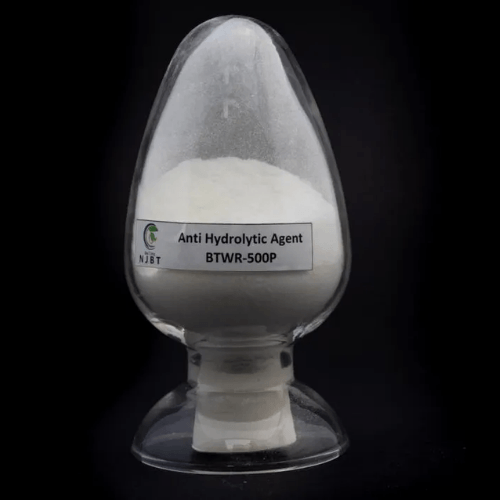
Anti-hydrolysis agent
CATÉGORIES : Additifs
BTCE-9013 is a polymeric epoxy functionalized chain extender. The epoxy functional groups in its structure can react with the terminal carboxyl, hydroxyl, and amino groups in long-chain resin molecules to extend the polymer chain, thereby improving the resin's mechanical properties, intrinsic viscosity, and inhibiting polymer hydrolysis. It can be used in food contact materials. BTCE-9013 is generally co-extruded with modified resins using twin-screw or single-screw extruders. The recommended dosage for bio-based and biodegradable plastics such as polybutylene adipate/terephthalate (PBAT), polylactic acid (PLA), polybutylene succinate (PBS), polymethyl ethylene carbonate (PPC), and polyhydroxyalkanoates (PHAs) is 0.2-0.8 phr. The recommended dosage for condensation-based recycled plastics such as polyamide (PA), polybutylene terephthalate (PBT), polycarbonate (PC), and polyethylene terephthalate (PET) is 0.2-1.5 phr. The specific dosage depends on the number of active functional groups in the resin and the performance requirements of the product.

Machine de recyclage de plastique - Série WTS
CATÉGORIES : Lignes de recyclage par application
WTS85, WTS100, WTS120, WTS150

Plastiques qui respecte l'environnement réutilisant la série refroidissant l'eau d'extrudeuse
• Modèle: Série TY-LW • Pays d'origine: Taiwan • Résine applicable: PP, PE, ABS, PS, HIPS. • Résine spécifique: POM, PC, ACRYLIQUE