

 English - EN
  繁體 - ZH-TW
  简体 - ZH-CN
  Español - ES
  日本語 - JA
  العربية - AR
  Русский - RU
  Français - FR
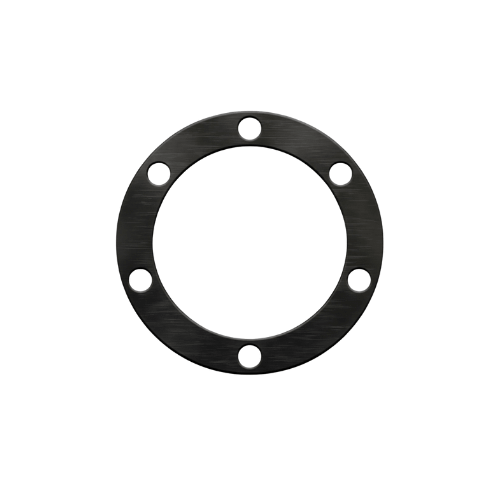
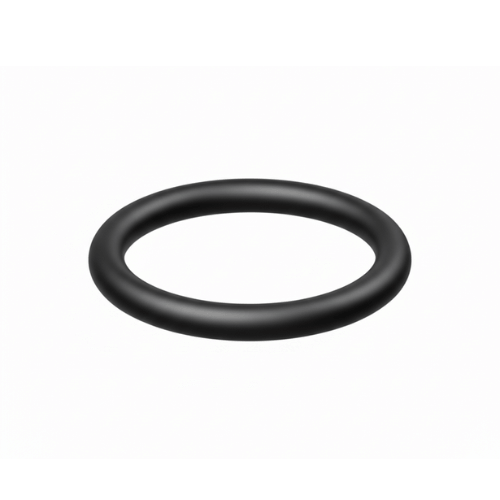
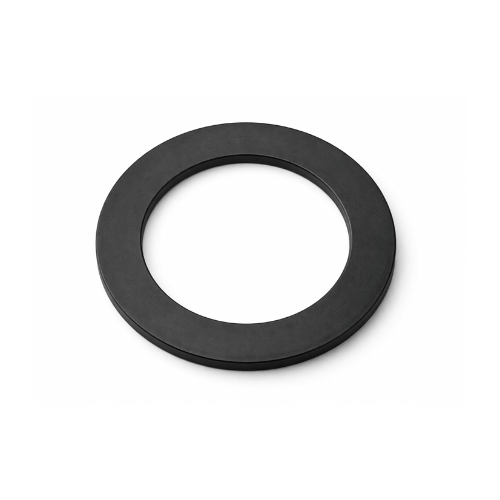
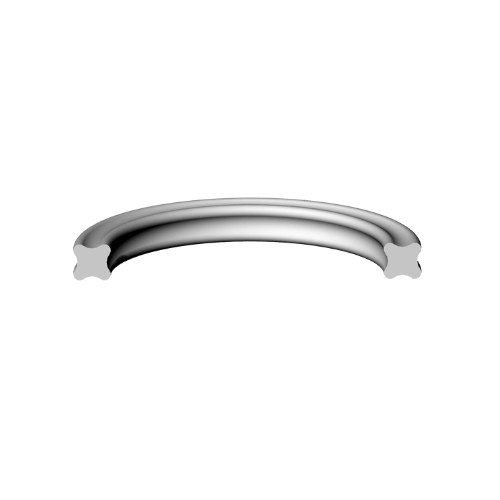
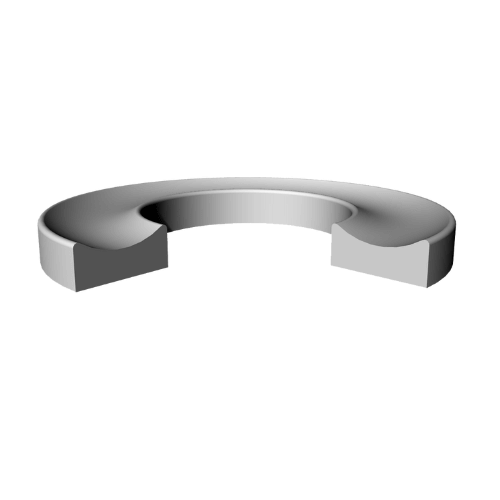
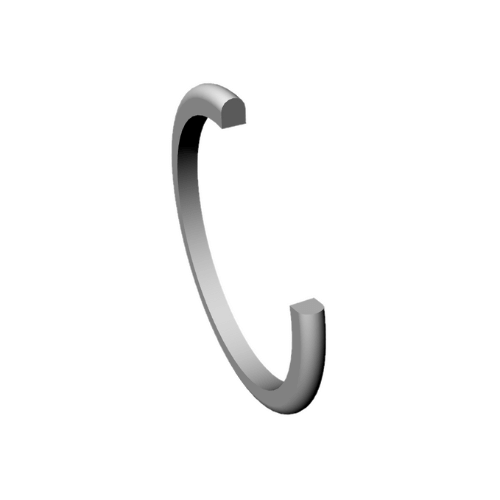
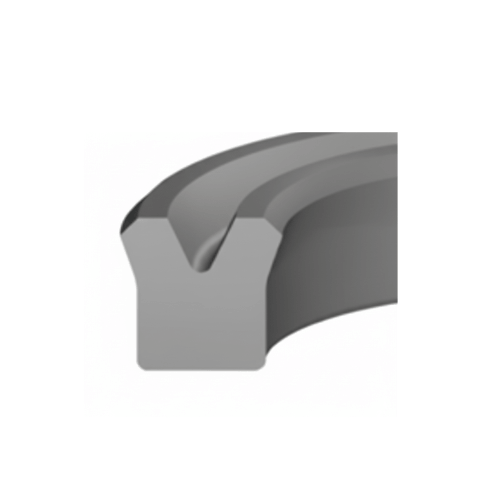
A gasket is a mechanical seal placed between two stationary surfaces to create a leak-free joint when compressed. Unlike O-rings or washers, gaskets are typically utilized in flat or flanged connections where a larger surface area requires uniform pressure distribution.
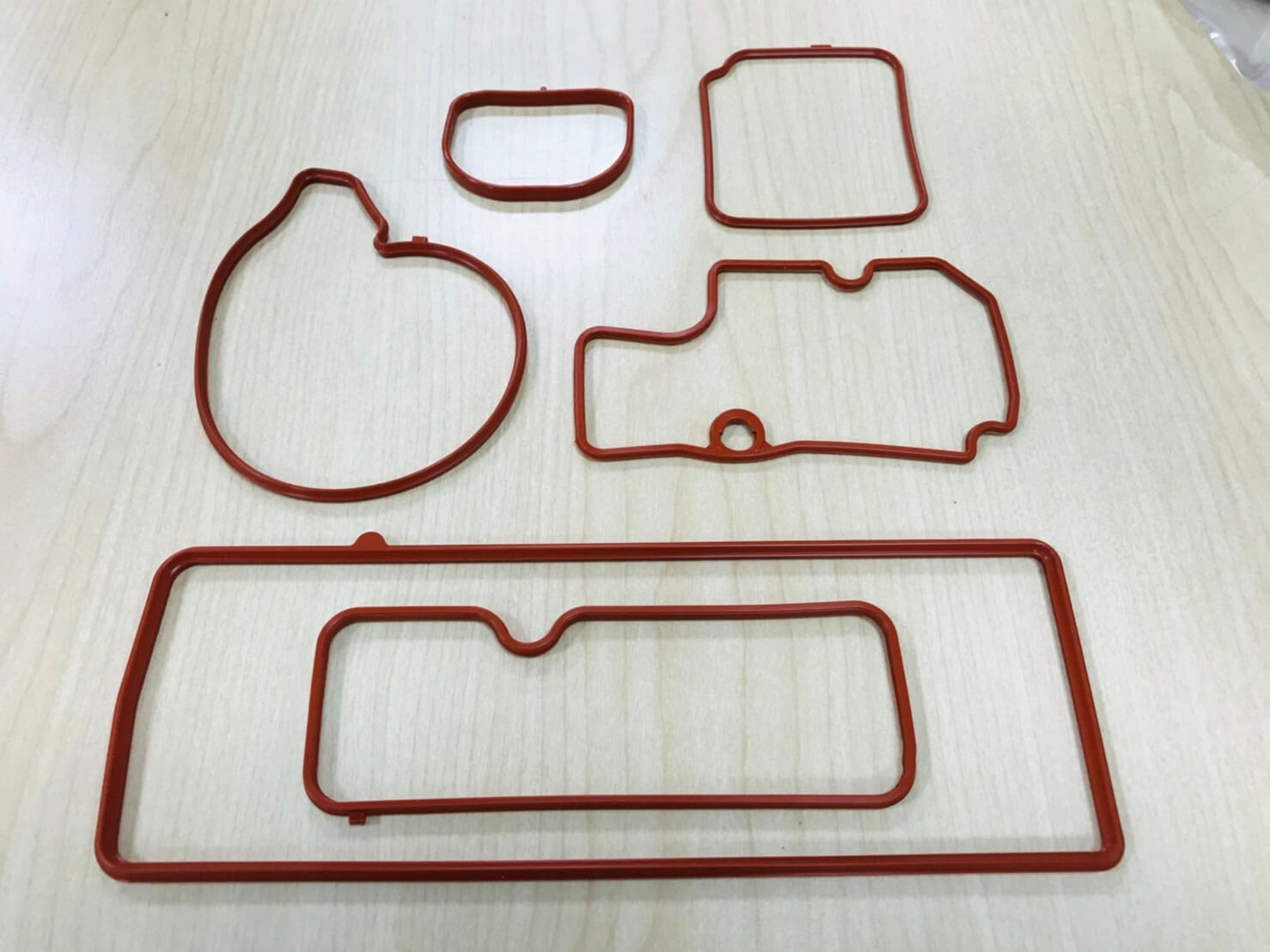
Why Choose Our Sealing Technology?
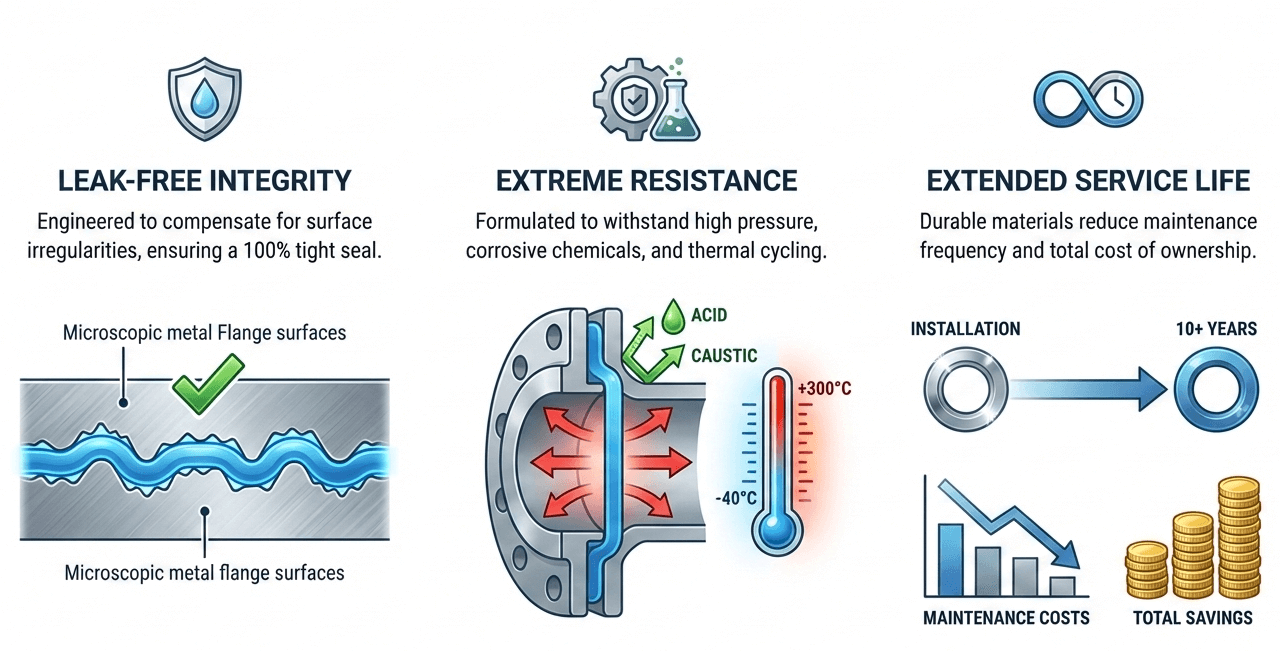
Leak-Free Integrity
Engineered to compensate for surface irregularities, ensuring a 100% tight seal.
Extreme Resistance
Formulated to withstand high pressure, corrosive chemicals, and thermal cycling.
Extended Service Life
Durable materials reduce maintenance frequency and total cost of ownership.
Material Science & Engineering
The success of a seal starts with material selection. We provide a comprehensive range of elastomers and specialty materials designed for critical environments.
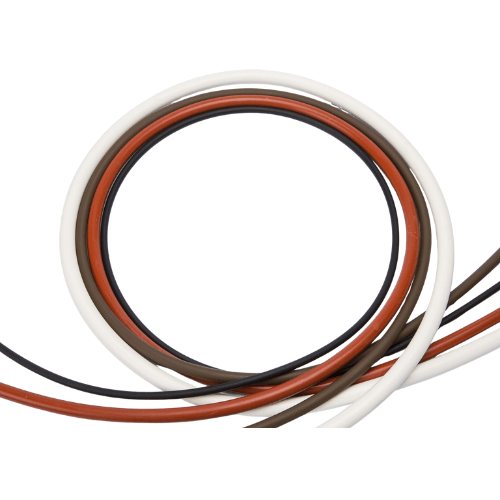
1. Elastomeric (Rubber) Gaskets
| Material | Key Properties | Common Media |
|---|---|---|
| NBR (Nitrile) | Superior oil and fuel resistance | Oils, Hydraulics, Fuels |
| EPDM | Excellent weathering and steam resistance | Water, Steam, Outdoor Use |
| FKM (Viton®) | High temperature and chemical stability | Acids, Solvents, Aerospace |
| Silicone | FDA compliant & extreme temperature stability | Food, Medical, Semiconductor |
2. Advanced & Semi-Metallic Gaskets
- PTFE (Teflon®) Near-universal chemical resistance and low friction coefficient.
- Fiber & Composites High structural strength engineered for high-pressure industrial use.
- Metal-Reinforced Combined metal strength with rubber sealing flexibility.
3. Custom Gasket Manufacturing
We specialize in providing bespoke sealing solutions tailored to your technical specifications:
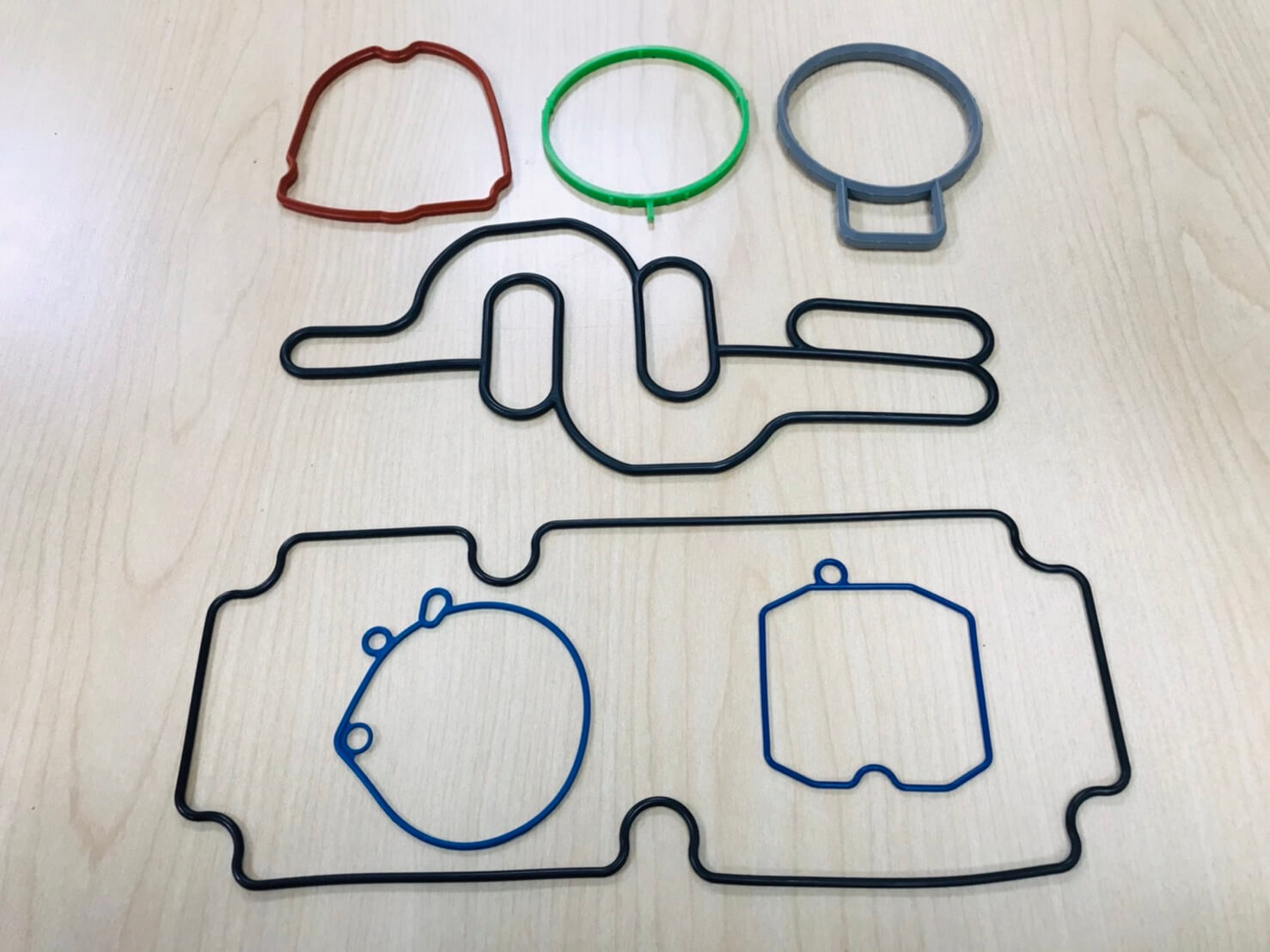
- Custom Geometry Precision cutting and molding for complex shapes and sizes.
- Tight Tolerances Ensuring perfect fitment for critical OEM applications.
- Prototyping Rapid development from initial sample to mass production.
- Material Hardness Specialized Shore A adjustments for compression control.
Our gaskets are the trusted choice for global leaders in:
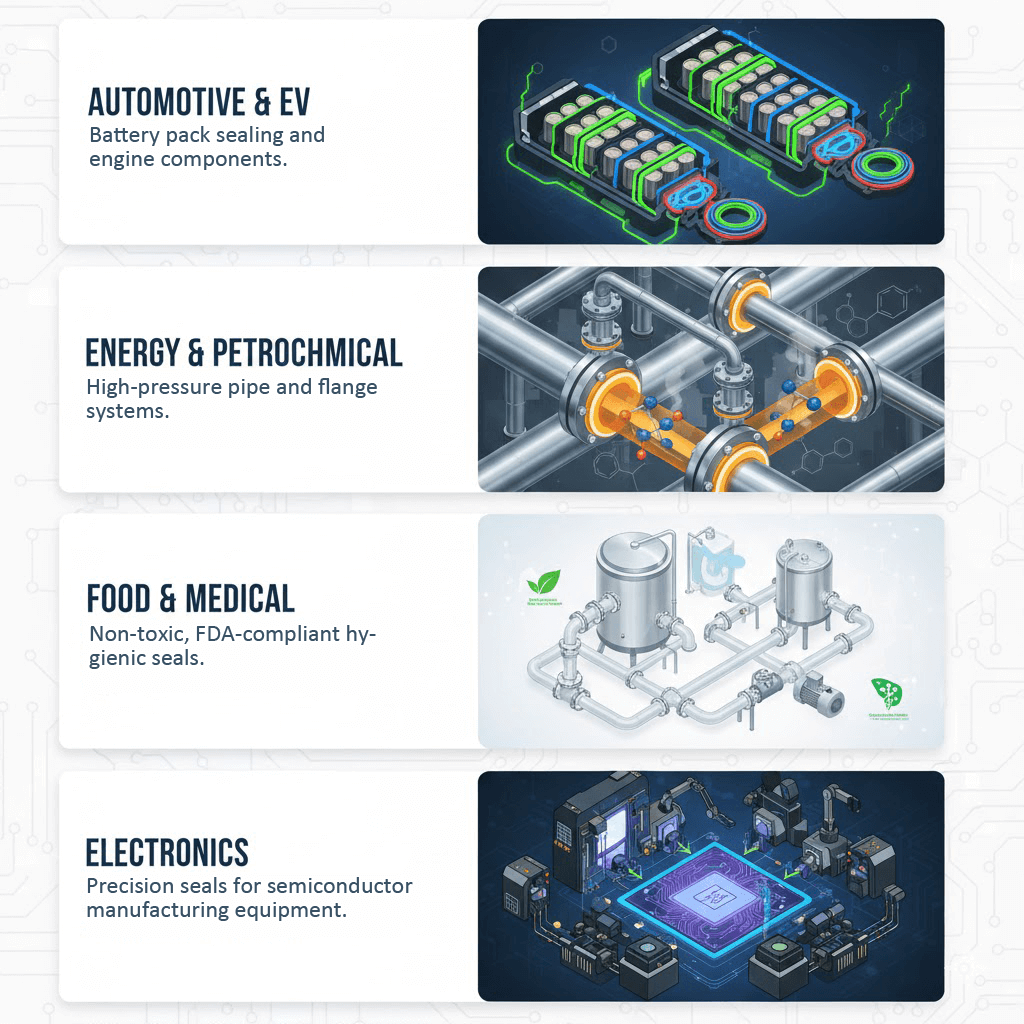
Automotive & EV
Battery pack sealing and engine components.
Energy & Petrochemical
High-pressure pipe and flange systems.
Food & Medical
Non-toxic, FDA-compliant hygienic seals.
Electronics
Precision seals for semiconductor manufacturing equipment.
Industrial Gaskets FAQ
1. What is a gasket?
A gasket is a mechanical sealing component installed between two mating surfaces to prevent the leakage of liquids or gases when compressed. Gaskets are primarily used in static sealing applications where a reliable, leak-free joint is essential for operational safety.
- Common Applications: Flange connections, housings, covers, pumps, valves, and piping systems.
- Key Function: To create a physical barrier that maintains a seal under varying pressures and temperatures.
2. What are gaskets used for?
Gaskets are critical for maintaining the integrity of industrial fluid systems. Their primary roles include:
- Leakage Prevention: Eliminating fluid or gas escape.
- Pressure Retention: Maintaining consistent internal system pressure.
- Surface Compensation: Filling irregularities or gaps between mating flange surfaces.
- Contamination Protection: Shielding internal components from external dust, moisture, and debris.
3. What types of gaskets are available?
We provide a diverse range of gaskets tailored to specific industrial requirements:
- Flat Gaskets: The standard solution for sealing between two flat surfaces.
- Flange Gaskets: Specifically engineered for pipe and valve flange interfaces.
- Rubber Gaskets: Flexible seals optimized for low to medium-pressure environments.
- PTFE Gaskets: Specialized for high-concentration chemical resistance.
- Metal or Semi-Metallic Gaskets: Designed for extreme high-pressure and high-temperature services.
- Custom Gaskets: Tailor-made components manufactured according to unique drawings or samples.
4. What materials are commonly used for gaskets?
Material selection is based on the specific media, temperature, and pressure of your application.
Elastomer Materials
- NBR (Nitrile): Exceptional resistance to oils, fuels, and grease.
- EPDM: Superior resistance to water, steam, weathering, and ozone.
- FKM (Viton®): High-performance resistance to heat and aggressive chemicals.
- Silicone: FDA-compliant material suitable for medical, food, and extreme temperature stability.
Non-Elastomer Materials
- PTFE (Teflon®): Near-universal chemical inertness.
- Fiber & Composites: High structural integrity for general industrial use.
- Metal-Reinforced: Enhanced strength for high-stress applications.
5. How do I choose the right gasket?
Choosing the correct gasket requires evaluating five key technical factors:
- Operating Media: Is the seal in contact with oil, water, chemicals, or gas?
- Temperature & Pressure: What are the maximum and minimum operating limits?
- Surface Type: Is it a standard flange, a rough casting, or a smooth machined surface?
- Compression Load: The amount of bolt force required to achieve a seal.
- Compliance Standards: Requirements for DIN, ISO, ASME, or JIS specifications.
6. What is the difference between a gasket and a washer?
| Feature | Gasket | Washer |
|---|---|---|
| Primary Function | High-integrity sealing | Load distribution & vibration resistance |
| Installation | Between two large mating surfaces | Underneath a bolt head or nut |
| Size | Larger surface area, custom shapes | Small, standardized dimensions |
| Typical Use | Flanges, pumps, engine housings | Fastening systems and assemblies |
7. Are custom gaskets available?
Yes. We specialize in custom manufacturing to meet unique OEM specifications. Our capabilities include:
- Production based on CAD drawings, 3D files, or physical samples.
- Customization of shapes, thicknesses, and diameters.
- Precision material compounding and hardness (Shore A) selection.
- Scalable production from prototyping to mass manufacturing.
8. Which industries utilize industrial gaskets?
Our high-performance gaskets are essential components in:
- Automotive & EV: Battery packs and powertrain sealing.
- Industrial Automation: Hydraulic and pneumatic systems.
- Fluid Handling: Pumps, valves, and complex piping networks.
- Chemical Processing: Handling corrosive and hazardous media.
- Medical & Food: Hygienic sealing for regulated environments.
9. Do your gaskets comply with international standards?
Quality and compliance are at the core of our manufacturing process. Our products meet:
- Environmental: RoHS & REACH compliance.
- Safety: FDA-grade materials for food and beverage applications.
- Technical: Compliance with DIN, ISO, ASME, and JIS industrial standards.
- Traceability: Full material test reports (MTR) and certificates of conformity available upon request.