English - EN
 繁體 - ZH-TW
 简体 - ZH-CN
 Español - ES
 日本語 - JA
 العربية - AR
 Русский - RU
 Français - FR



Ligne de conversion
CATÉGORIES : Machines de découpe
La nouvelle génération de ligne de conversion de sacs tissés pour sacs cousus par le bas convient aux tissus tissés enduits et non enduits, aux tissus laminés en film BOPP et aux tissus en lino. Avec une grande variété d'options, une large possibilité d'applications est offerte au client.


Fabricant de moules en plastique à injection de Taiwan
CATÉGORIES : Moules d’Injection
Pièces extérieures pour marque par exemple HONDA, SUZUKI, MAZDA etc… L'apparence de la surface principalement finie en texture ou en placage. Répondez aux exigences élevées des clients en matière d'ajustement des produits.


Moule de grille de pièces d'auto en plastique d'injection
CATÉGORIES : Moules d’Injection
Taille du moule: 980W x 1300L x 898H mm Poids du moule: 5900kg Machine d'injection: 950TON Surface: poli miroir et chromage et texture
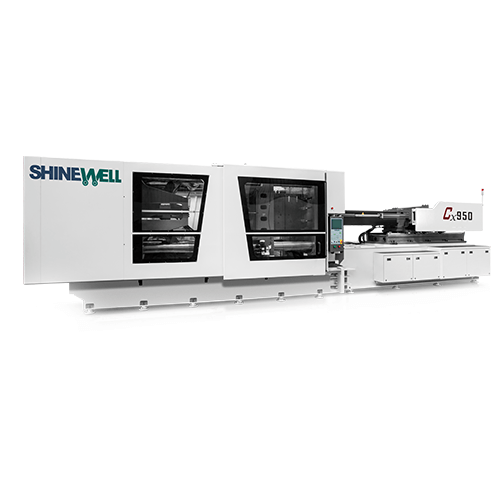
Machine de moulage par injection à économie d'énergie servo CX-60 - CX-1600
CATÉGORIES : Machines de Moulage par Injection Horizontales
APPLICATIONS: Emballage, optique, électronique, préforme PET, fermetures, couverts, paroi mince, automobile

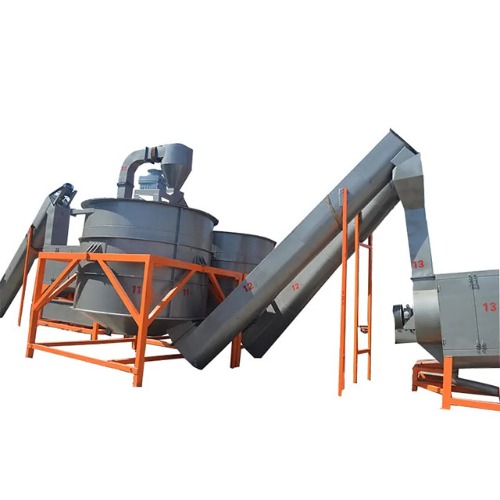
Fibre Grade PET Cleaning System with Automation
CATÉGORIES : Lignes de recyclage par application
Automatic Fibre-Grade PET Bottle Washing Recycling Line The automatic fibre-grade PET bottle washing recycling line is an integrated plastic recycling system designed to convert post-consumer PET bottles into clean,high-quality recycled PET flakes suitable for polyester fiber production.The line combines automatic material handling,efficient bottle separation,intensive washing,contaminant removal,mechanical dewatering,thermal drying,and final flake classification in one continuous process. Built for high-throughput plastic recycling plants,this recycled bottle to fiber production line helps processors recover valuable PET from discarded beverage bottles and transform it into a consistent secondary raw material for applications such as staple fiber,filament yarn,nonwoven fabrics,strapping,and other polyester products. Product Overview PET bottles typically contain labels,caps,rings,adhesives,dirt,moisture,and other contaminants that must be removed before the material can be reused.The automatic fibre grade PET bottle washing line is engineered to separate and clean these components while minimizing PET loss and preserving the quality of the recovered polymer. After processing,the fibre grade PET bottle recycling line produces washed PET flakes with controlled moisture,reduced contamination,and stable bulk density.The final product is commonly used as feedstock for polyester fiber manufacturing and other non-food-grade PET recycling applications. Typical Processing Flow The complete fibre grade PET bottle washing line may include the following stages: 1.Bottle Bale Opening and Feeding Compressed PET bottle bales are loaded into a bale breaker or bale opener.The equipment loosens the bottles and feeds them continuously to the sorting section. 2.Pre-Sorting and Manual Sorting Operators or automated sorting equipment remove PVC bottles,metal objects,heavily contaminated containers,hazardous materials,and other non-PET items.Effective sorting at this stage improves final flake quality and protects downstream equipment. 3.Label and Cap Separation A label remover machine separates loose and attached labels from the bottles.Caps and rings,which are typically made from HDPE or PP,are removed during the process through air separation,density separation,and washing. 4. Bottle Crushing A wet granulator or PET bottle crusher cuts the bottles into smaller pieces.Water may be introduced during crushing to reduce dust,control heat,and begin the initial rinsing process. 5. Pre-Washing The pre-washing section removes loose dirt,sand,beverage residues,and other surface contaminants before intensive cleaning. 6. Hot Washing PET flakes are washed in a heated solution that helps remove oils,adhesives,labels,organic residues,and stubborn contamination.The hot-washing system can be configured with detergent according to the incoming material and required output quality. 7. Friction Washing A high-speed friction washer applies mechanical scrubbing action to the flakes.This stage removes remaining dirt,glue,paper fibers,and surface residues while improving flake cleanliness. 8. Rinsing and Floating Separation Clean-water rinsing removes detergent and loosened contaminants.A float-sink tank separates PET flakes from lighter materials such as PP and HDPE caps,labels,and other low-density plastics. 9. Mechanical Dewatering A centrifugal dewatering machine removes most of the surface water from the washed flakes,reducing the energy required for thermal drying. 10. Thermal Drying Hot-air drying reduces residual moisture to a controlled level suitable for storage,packaging,or further processing. 11. Air Classification and Fine Separation Air separators remove lightweight labels,films,dust,and residual fines.Additional screens,magnetic separators,or metal detectors can be installed to improve product purity. 12. Flake Storage and Packaging The finished PET flakes are conveyed to a storage silo,cyclone,or jumbo-bag filling station for convenient handling and shipment. Key Features Fully Automatic Operation The fibre grade PET bottle recycling machine is designed for continuous operation with centralized controls for feeding,crushing,washing,conveying,drying,and packaging.Automated sensors and control systems help regulate material flow,water temperature,residence time,and equipment status. Designed for Fibre-Grade PET Flakes The washing and separation process is configured to produce clean PET flakes appropriate for polyester fiber production.The final quality depends on feedstock composition,sorting effectiveness,process settings,and the selected equipment configuration. Efficient Contaminant Removal The pet bottle to polyester fibre machine targets common PET bottle contaminants,including: - Labels and label adhesive - PP and HDPE caps and rings - Dirt,sand,and dust - Beverage residues - Oil and grease - Paper and organic matter - PVC and other incompatible plastics - Metal particles - Lightweight films and floating materials Integrated Hot-Washing Technology Hot washing in PET bottle cleaning system improves the removal of difficult contaminants that cannot be effectively eliminated through cold washing alone. Temperature,detergent concentration,washing time,and water circulation can be adjusted to meet different feedstock conditions. Reduced PET Loss The fibre grade PET bottle washing machine uses controlled conveying,density separation,and optimized washing stages to limit the loss of usable PET flakes.Proper equipment matching helps improve recovery rates and overall plant profitability. Water Recycling Capability A water-treatment and recirculation system can be integrated to reduce fresh-water consumption.The system may include settling tanks,filtration units,screw presses,dissolved-air flotation,and other treatment equipment depending on local regulations and the level of contamination. Modular and Customizable Configuration The fibre grade PET recycling machine can be customized based on: - Required production capacity - Bottle bale quality - PET contamination level - Desired flake cleanliness - Available factory space - Local utility conditions - Water-treatment requirements - Automatic or semi-automatic operation preferences Durable Construction Key components are manufactured from wear-resistant materials and corrosion-resistant stainless steel where appropriate.High-wear areas,such as crushers,friction washers,screw conveyors,and dewatering machines,can be equipped with replaceable wear parts to simplify maintenance. Stable Flake Quality Multiple separation and washing stages help achieve a consistent output in terms of cleanliness,particle size,moisture content,and bulk density.Stable flake quality supports more reliable downstream fiber production. Main Equipment Configuration A typical automatic PET bottle cleaning system may include: - Bale opener or bale breaker - Infeed conveyor - Trommel or pre-sorting screen - Manual sorting conveyor - Magnetic separator - Label remover - Wet PET bottle crusher - Pre-washer - Hot-washing tank - Friction washer - Float-sink separation tank - High-speed friction washer - Dewatering machine - Hot-air drying system - Zigzag air separator - Vibrating screen - Metal detector - Conveying system - PET flake storage silo - Automatic bagging or jumbo-bag filling system - Electrical control cabinet - Water circulation and wastewater-treatment system The exact configuration can be adjusted according to the raw material and required product specifications. Output Applications The washed PET flakes produced by this fibre grade PET Cleaning system are suitable for use in the manufacture of: - Polyester staple fiber - Recycled polyester filament - Nonwoven fabrics - Hollow fiber filling - Recycled PET strapping - Engineering plastic compounds - Thermoformed PET products - Other non-food-grade recycled PET products For applications requiring particularly high purity or advanced polymer performance,additional equipment such as optical sorters,near-infrared separators,melt filtration,pelletizing systems,or solid-state polycondensation units may be added. Operational Benefits - Converts waste PET bottles into valuable recycled material - Supports high-volume,continuous plastic recycling - Reduces dependence on virgin PET resin - Helps lower landfill disposal and environmental pollution - Improves material recovery from post-consumer waste - Reduces manual labor through automated processing - Produces a saleable raw material for the textile and plastics industries - Supports more efficient use of water and energy when paired with recycling systems - Allows flexible integration into existing plastic recycling plants Quality and Performance Considerations The quality of fibre-grade PET flakes depends not only on the fibre grade plastic recycling equipment but also on the quality of the incoming bottles.Feedstock with excessive PVC,oil,dirt,multilayer materials,or non-PET plastics may require enhanced sorting and washing equipment. For best results,the plastic recycling plant should maintain: - Effective pre-sorting - Controlled hot-washing conditions - Proper separation of caps and labels - Regular water replacement or treatment - Correct crusher and screen settings - Routine removal of accumulated contaminants - Regular inspection of wear parts - Proper control of final flake moisture Ideal Applications This automatic fibre grade PET recycling machine is suitable for: - Plastic recycling plants - PET bottle recycling facilities - Polyester fiber manufacturers - Waste management companies - Material recovery facilities - Circular-economy projects - Industrial recyclers processing post-consumer PET bottles Product Summary The automatic recycled bottle to fiber production line provides a complete solution for processing used PET bottles into clean,reusable flakes for plastic recycling.With automated conveying,advanced washing,density separation,dewatering,drying,and optional water-treatment systems,the PET bottle washing line is designed to deliver reliable performance,efficient contaminant removal,and consistent fibre-grade PET output. It is an effective investment for plastic recycling plants seeking to increase PET recovery,improve product quality,reduce operating labor,and supply recycled raw materials to the polyester fiber and plastics industries. Fibre Grade PET Cleaning System with Durable Construction Special Design Automation Customization:https://www.petrecyclingmachinery.com/Fibre-Grade-PET-Cleaning-System-with-Durable-Construction-Special-Design-Automation-Customization-pd533023348.html PET Bottle Washing Line Manufacturer - Haorui Machinery:https://www.petrecyclingmachinery.com/PET-Bottle-Washing-Line-pl43660357.html Plastic Recycling Machines & Solutions - Haorui Machinery:https://www.petrecyclingmachinery.com/products.html PET Bottle Recycling Machine & Plastic Crusher - Haorui Machinery:https://www.petrecyclingmachinery.com


Perforation et Slitter Machine
CATÉGORIES : Fendeuses et rembobineuses
La machine de perforation et de refendage World Steel est le meilleur choix lorsqu'il s'agit de personnaliser votre film pour l'emballage et les applications agricoles. Il est capable de traiter une gamme de types de films polypropylène monocouche et des équipements optionnels peuvent être ajoutés pour améliorer la précision et la qualité de la production. Certaines de ces options incluent : un dispositif PLC pour surveiller et contrôler les entrées et les sorties, une bobineuse de déchets pour collecter vos déchets de film, des machines de découpe de noyaux pour la préparation des tubes en papier et une roue à aiguilles chaudes spécialisée pour une précision extrême.

Système de mesure et de transport automatique
CATÉGORIES : Manutention, Convoyage et Stockage de Matériaux
Applications: PVC CORRUGATED SHEET

MACHINE DE COUPE D'ALIMENTATION AUTOMATIQUE MULTICOUCHE VAC-310
CATÉGORIES : Machines de découpe
Mécanisme de pressurisation synchrone à double essieu : Effectue la pressurisation avec double essieu de sortie pour fournir une capacité de pressurisation puissante et stabilisée. Mécanisme d'alimentation automatique : Utilise la servocommande pour effectuer le réglage en fonction de la largeur et de la longueur du matériau. Système de moule d'alignement : Effectue un processus de coupe simultané après avoir verrouillé le matériau en place. Système de stockage des paramètres : Effectue une mémoire basée sur les modules pour les chiffres de production afin de faciliter la gestion des paramètres. Mécanisme de plaque tournante de la plaque de coupe : Règle la longueur de décalage pour atteindre plus de 95% du taux d'utilisation de la plaque après la coupe. Circuit de suralimentation à haute efficacité : Réduit plus de 30% de la consommation d'énergie par rapport au circuit conventionnel.


Conductive & Anti-Static Plastic Compounds
CATÉGORIES : Résine PP
This category includes permanently conductive and anti-static plastic pellets, formulated for use in trays, carriers, and components in ESD-sensitive environments. Surface resistivity ranges from 10³ to 10¹¹ Ohm/sq depending on the grade (permanent or dissipative). Glass fiber-reinforced conductive options are also available for applications requiring enhanced strength and durability.


Soft Acicular Anti Static Device(CE)
CATÉGORIES : Équipements de Soudage et Traitement de Surface
Soft acicular anti-static devices feature high performance, high security and flexible installation methods, comprising one or two soft acicular anti-static rods, and a 5KV anti-static generator. Different from traditional acicular anti-static rods that use a single stainless steel needle to discharge static charge, the single discharging needle unit of a soft acicular anti-static rod is comprised of up to a hundred carbon fiber filaments, to dramatically extend discharging range, and hence enhance its anti-static efficiency. In installation, the installation distance of a soft acicular type can reach as far as 30 centimeters, which is 10 times more than the traditional acicular type, which is a very flexible approach for users, saving them trouble in production flows caused by installation distance. It can be used to adapt to a wide variety of combinations on machines for various industrial manufacturing purposes, for instance, printing machines, packaging machines, photoelectric machines and textile machines. In safety, most traditional anti-static generators are 10 to 13KV, while the soft acicular anti-static rod working with a 5KV generator can reduce safety hazards resulting from hypertension discharge, without compromising anti-static performance due to reduced voltage. In performance, traditional anti-static devices have a limited efficiency rate, at approximately 60%~70%. The optimal efficiency of the soft acicular anti-static device, when an appropriate number of modules are installed optimal locations, can be as high as 80% or more. (Actually, surveyed readings may depend on customer’s working environment, materials, machine speed and hygrometric conditions on the day of measurement). Our soft acicular anti-static rod has been awarded patent rights in the Republic of China (invention patent certificate No. I 315166) and the People’s Republic of China (new design patent certificate No. 1840367). Besides domestic sales in Taiwan, our products are exported to dozens of countries and highly acclaimed by customers. We also provide anti-static consultancy service. Your comments are welcome.


Arbre à air
CATÉGORIES : Guidage de Bande et Contrôle de Tension
Des arbres expansibles à air de haute qualité utilisés sur la machine d'impression, la machine de plastification, la machine de revêtement, la machine de refente, la machine de fabrication de sacs et les bobineuses pour l'application de textile, papier, film, feuille et plastique sont disponibles sur demande.
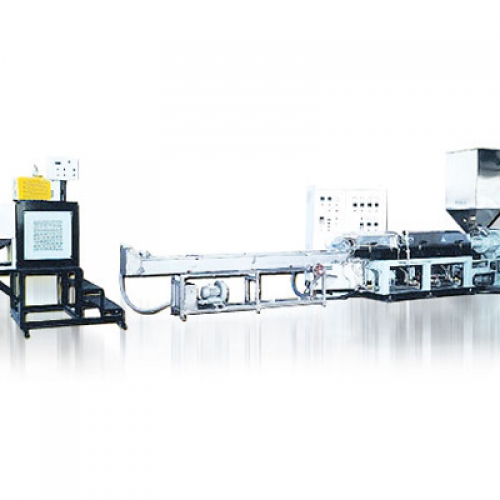
Usine de teinture et de pelletisation
CATÉGORIES : Lignes de granulation de plastique recyclé
• Modèle: Série TY-DB • Pays d'origine: Taiwan • Résine applicable: PP, PE, ABS, PS. • Résine spécifique: PC, PET, ACRYLIQUE, NYLON. • Capacité: 50-1000 kg / h