


 English - EN
  繁體 - ZH-TW
  简体 - ZH-CN
  Español - ES
  日本語 - JA
  العربية - AR
  Русский - RU
  Français - FR

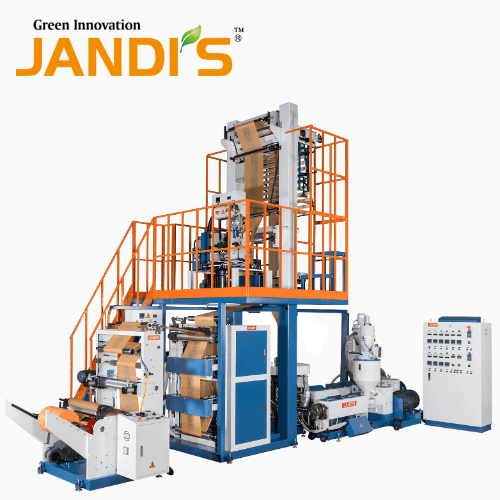
Machine de gonflage haute vitesse à 3 couches (GF-ABA-55-50)
CATÉGORIES : Extrudeuses de film soufflé
Impression flexographique en ligne 2 + 1
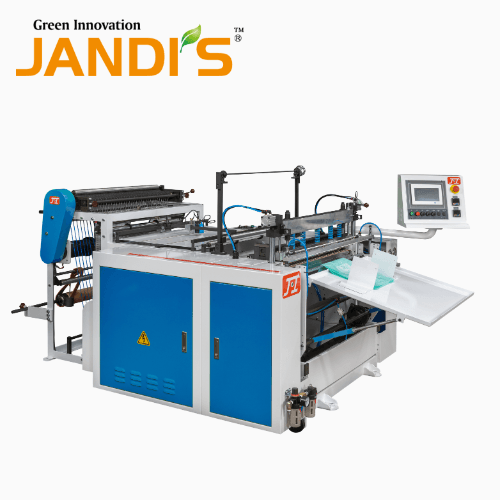
Bottom Sealing Bag Making Machine for Water Soluble Material(GF-WJ Series)
CATÉGORIES : Machines de fabrication de sacs par application
The GF-WJ Series is a bottom sealing bag making machine for water soluble material. PVA based water soluble film is fed from the unwind stand, sealed across the bottom of each bag and cut off, producing water soluble bags. It sits in JANDI'S bag making range next to the GF-J/SV bottom sealing machines for conventional and biodegradable film, as the machine specified for water soluble film.Drive type, sealing and cutting method, cutting width, cutting length, film thickness range and production speed of the GF-WJ Series are specified with the buyer at quotation, together with the film handling from unwind to sealing that water soluble film requires.Type: bottom sealing bag making machine for water soluble material, GF-WJ SeriesMaterial: PVA based water soluble filmBottom sealing and cut-off from tubular filmRelated JANDI'S listing: GF-J/SV bottom sealing bag making machinesDrive, sealing method, cutting width, length, film thickness and speed confirmed at quotation
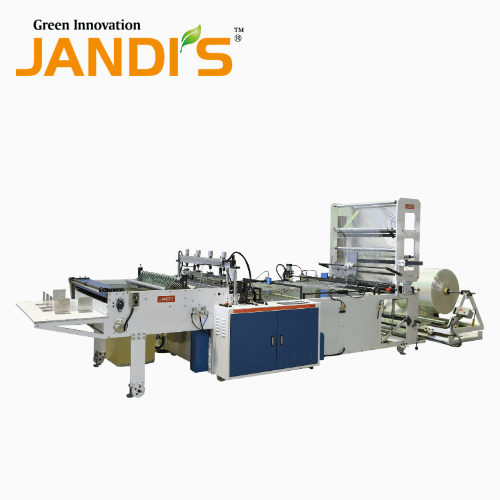
Side Sealing Bag Making Machine Biodegradable Material(GF-S/SV Series)
CATÉGORIES : Machines de fabrication de sacs plastiques
The GF-S/SV Series is a side sealing bag making machine configured for biodegradable material. It is the biodegradable-film version of JANDI'S GF-S/SV and SE/SV side sealers: folded or tubular film is sealed and cut along the side to make side-seal bags from PLA and PBAT based film.The GF-S/SV layout includes a rear feeder with gusset, fold, slitter and adhesive tape applicator functions, a servo drive, an HMI control panel, a printing scanner, a conveying belt and a collecting table. Options in the range include tension control, EPC edge guiding, a triangle folding device, punch hole and Mexican-hat punch devices, ultrasonic sealing, a perforating sealing knife, an envelope punching mould and an automatic stacking table. Cutting width, cutting length, film thickness range and production speed are confirmed at quotation.Type: side sealing bag making machine for biodegradable material, GF-S/SV SeriesMaterial: PLA and PBAT based biodegradable filmServo drive with HMI control panelRear feeder: gusset, fold, slitter, adhesive tape applicatorPrinting scanner, conveying belt and collecting tableOptions: tension control, EPC, triangle folding, punch hole, Mexican-hat punchOptions: ultrasonic sealing, perforating sealing knife, envelope punching mould, automatic stacking tableCutting width, length, film thickness and speed confirmed at quotation
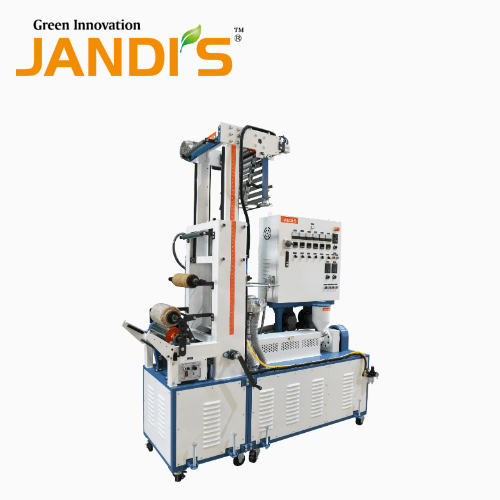
Lab Blown Film Machine for Biodegradable Material(TINY-BC28)
CATÉGORIES : Extrudeuses de film soufflé
The TINY-BC28 is a laboratory blown film machine for biodegradable material. It is the biodegradable-resin counterpart of JANDI'S TINY-28 tiny inflation machine, sized for lab use, small and thin film samples and colour testing, so that PLA and PBAT based compounds can be blown into sample film on a small extruder before a production line is specified.Like the TINY series, it is a compact single-layer unit with a small-diameter screw, a blown film die, a take-up unit and a single-station surface-friction winder, operated from a temperature control panel. Film width and output are those of a bench-scale machine; the exact figures and the screw and die configuration for biodegradable compounds are confirmed at quotation.Type: laboratory blown film machine, model TINY-BC28Material: PLA and PBAT based biodegradable compoundsApplication: lab use, small and thin film samples, colour testingSmall-diameter extruder with blown film dieTake-up unit and single-station surface-friction winderTemperature control panelFilm width and output confirmed at quotation
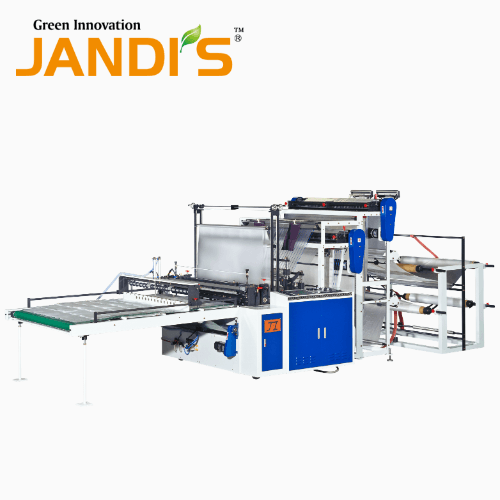
Bottom Sealing Bag Making Machine Biodegradable Material(GF-A/SV Series )
CATÉGORIES : Machines de découpe
The GF-A/SV Series is a bottom sealing bag making machine configured for biodegradable material. It is the biodegradable-film version of JANDI'S GF-A/SV knife-cutting bag makers: tubular film is fed through a servo-driven machine that seals the bottom of each bag and cuts it off with a knife, producing flat bottom-sealed bags from PLA and PBAT based compounds.The GF-A/SV range is built in single-deck and multi-deck configurations, with the number of lines and the cutting width chosen per model, and the biodegradable version follows the same layout. Cutting width, cutting length, film thickness range, number of lines and production speed are confirmed with the buyer at quotation.Type: bottom sealing bag making machine for biodegradable material, GF-A/SV SeriesMaterial: PLA and PBAT based biodegradable filmServo driveKnife-cutting, bottom sealingSingle-deck and multi-deck configurations in the rangeNumber of lines and cutting width per modelCutting length, film thickness and speed confirmed at quotation
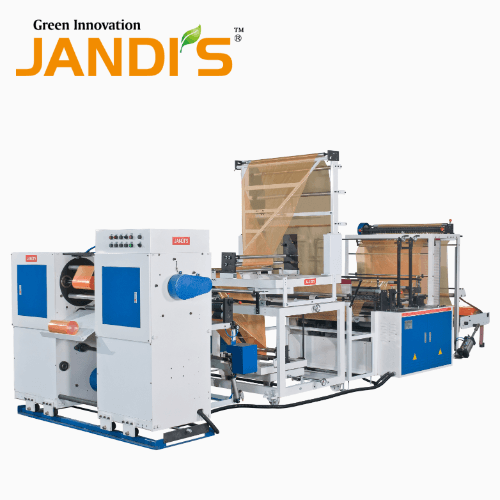
Bag-on-Roll Making Machine Biodegradable Material(GF-R/SV Series)
CATÉGORIES : Machines de fabrication de sacs plastiques
The GF-R/SV Series is a bag-on-roll making machine configured for biodegradable material. It is the biodegradable-film version of JANDI'S servo-driven semi-automatic GF-R/SV bag-on-roll machines: tubular film is sealed and perforated at each bag length and wound into rolls of tear-off bags, using PLA and PBAT based compounds instead of polyethylene.The machine follows the GF-R/SV layout, with a tension-type sealing knife, a perforating knife of teeth or band-saw type, a silicone roller sealing base, a temperature controller and a printing scanner for printed film. Single-line and two-line models are available in the range, with maximum cutting width, cutting length and production speed depending on the model; longer cutting lengths are available on request. Model selection is confirmed at quotation.Type: bag-on-roll making machine for biodegradable material, GF-R/SV SeriesMaterial: PLA and PBAT based biodegradable filmServo drive, semi-automaticTension-type sealing knife with silicone roller sealing basePerforating knife: teeth type or band sawTemperature controller and printing scannerSingle-line and two-line models in the rangeCutting width, length and speed confirmed at quotation
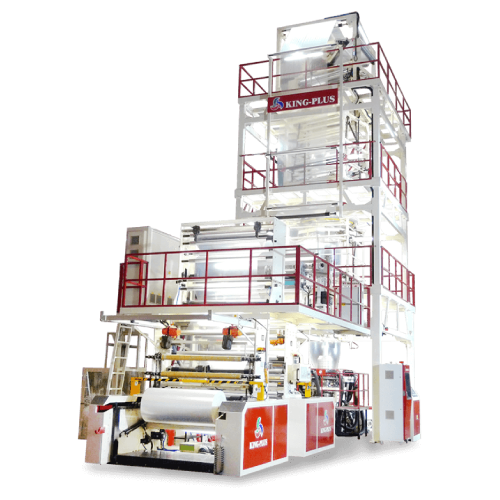
Machine de film soufflé par co-extrusion à trois couches
CATÉGORIES : Machines de soufflage par coextrusion
De nos jours, les emballages souples remplacent les contenants qui nécessitent beaucoup d'énergie pour être fabriqués comme le bois, les boîtes en papier, le verre et l'acier. Étant donné que les emballages flexibles nécessitent une température de traitement inférieure à celle des matériaux ci-dessus, les émissions de dioxyde de carbone peuvent être extrêmement réduites. Il ne fait aucun doute que le développement des emballages souples devient la nouvelle tendance du marché actuellement. L'utilisation d'emballages souples est couverte dans les biens de consommation et industriels, les aliments, les traitements médicaux et les produits électroniques et il peut s'agir de films de prévention, de films de protection, de films rétractables, etc. L'industrie de l'emballage flexible met l'accent sur la façon de réduire la structure du film et de posséder plusieurs performances différentes simultanément. Les machines multicouches pourraient permettre d'atteindre le résultat escompté. Les multiples matériaux dans la machine multicouche pourraient donner des performances différentes dans chaque couche. En outre, il pourrait être plus flexible d'organiser la distribution du matériau permettant aux utilisateurs de manipuler les résines plus largement afin de réduire le coût du matériau et de la production. À l'heure actuelle, sur la question de la durabilité, les gens prêtent attention à la possibilité de recycler pour réutiliser et au développement de matériaux biodégradables. Dans l'industrie de l'emballage flexible, c'est une opportunité et un défi pour chaque fabricant de réaliser un film haute performance, tout en économisant de l'énergie et en respectant l'environnement. N'hésitez pas à nous contacter et à nous donner les informations sur le film, King-Plus fournira une machine à film soufflé sur mesure selon vos besoins.
chain extender
CATÉGORIES : Additifs
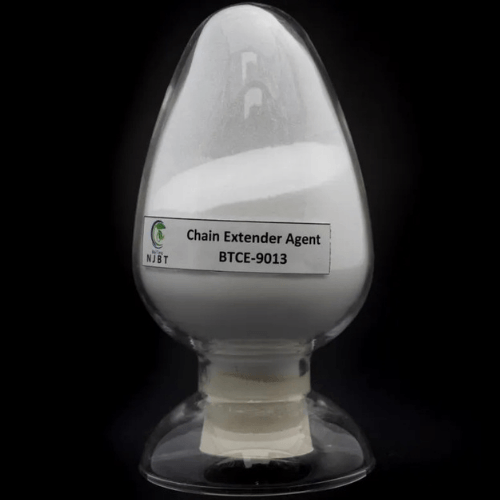
BTCE-9013 is a polymeric epoxy functionalized chain extender. The epoxy functional groups in its structure can react with the terminal carboxyl, hydroxyl, and amino groups in long-chain resin molecules to extend the polymer chain, thereby improving the resin's mechanical properties, intrinsic viscosity, and inhibiting polymer hydrolysis. It can be used in food contact materials. BTCE-9013 is generally co-extruded with modified resins using twin-screw or single-screw extruders. The recommended dosage for bio-based and biodegradable plastics such as polybutylene adipate/terephthalate (PBAT), polylactic acid (PLA), polybutylene succinate (PBS), polymethyl ethylene carbonate (PPC), and polyhydroxyalkanoates (PHAs) is 0.2-0.8 phr. The recommended dosage for condensation-based recycled plastics such as polyamide (PA), polybutylene terephthalate (PBT), polycarbonate (PC), and polyethylene terephthalate (PET) is 0.2-1.5 phr. The specific dosage depends on the number of active functional groups in the resin and the performance requirements of the product.

Machine de film soufflé par co-extrusion à trois couches ABA
CATÉGORIES : Machines de soufflage par coextrusion
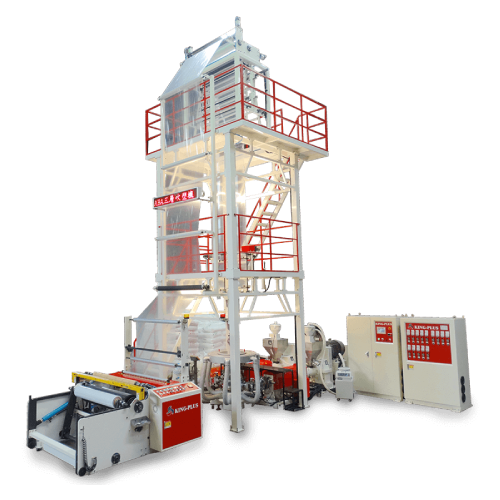
De nos jours, les emballages souples remplacent les contenants qui nécessitent beaucoup d'énergie pour être fabriqués comme le bois, les boîtes en papier, le verre et l'acier. Étant donné que les emballages flexibles nécessitent une température de traitement inférieure à celle des matériaux ci-dessus, les émissions de dioxyde de carbone peuvent être extrêmement réduites. Il ne fait aucun doute que le développement des emballages souples devient la nouvelle tendance du marché actuellement. L'utilisation d'emballages souples est couverte dans les biens de consommation et industriels, les aliments, les traitements médicaux et les produits électroniques et il peut s'agir de films de prévention, de films de protection, de films rétractables, etc. L'industrie de l'emballage flexible met l'accent sur la façon de réduire la structure du film et de posséder plusieurs performances différentes simultanément. Les machines multicouches pourraient permettre d'atteindre le résultat escompté. Les multiples matériaux dans la machine multicouche pourraient donner des performances différentes dans chaque couche. En outre, il pourrait être plus flexible d'organiser la distribution du matériau permettant aux utilisateurs de manipuler les résines plus largement afin de réduire le coût du matériau et de la production. À l'heure actuelle, sur la question de la durabilité, les gens prêtent attention à la possibilité de recycler pour réutiliser et au développement de matériaux biodégradables. Dans l'industrie de l'emballage flexible, c'est une opportunité et un défi pour chaque fabricant de réaliser un film haute performance, tout en économisant de l'énergie et en respectant l'environnement. N'hésitez pas à nous contacter et à nous donner les informations sur le film, King-Plus fournira une machine à film soufflé sur mesure selon vos besoins.
Machine de film soufflé par co-extrusion à cinq couches
CATÉGORIES : Machines de soufflage par coextrusion
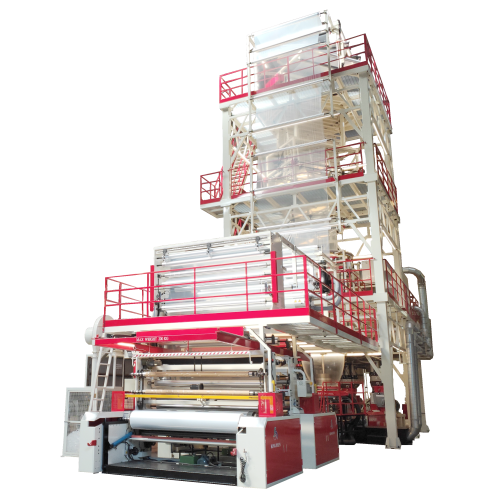
De nos jours, les emballages souples remplacent les contenants qui nécessitent beaucoup d'énergie pour être fabriqués comme le bois, les boîtes en papier, le verre et l'acier. Étant donné que les emballages flexibles nécessitent une température de traitement inférieure à celle des matériaux ci-dessus, les émissions de dioxyde de carbone peuvent être extrêmement réduites. Il ne fait aucun doute que le développement des emballages souples devient la nouvelle tendance du marché actuellement. L'utilisation d'emballages souples est couverte dans les biens de consommation et industriels, les aliments, les traitements médicaux et les produits électroniques et il peut s'agir de films de prévention, de films de protection, de films rétractables, etc. L'industrie de l'emballage flexible met l'accent sur la façon de réduire la structure du film et de posséder plusieurs performances différentes simultanément. Les machines multicouches pourraient permettre d'atteindre le résultat escompté. Les multiples matériaux dans la machine multicouche pourraient donner des performances différentes dans chaque couche. En outre, il pourrait être plus flexible d'organiser la distribution du matériau permettant aux utilisateurs de manipuler les résines plus largement afin de réduire le coût du matériau et de la production. À l'heure actuelle, sur la question de la durabilité, les gens prêtent attention à la possibilité de recycler pour réutiliser et au développement de matériaux biodégradables. Dans l'industrie de l'emballage flexible, c'est une opportunité et un défi pour chaque fabricant de réaliser un film haute performance, tout en économisant de l'énergie et en respectant l'environnement. N'hésitez pas à nous contacter et à nous donner les informations sur le film, King-Plus fournira une machine à film soufflé sur mesure selon vos besoins.
Bio-based TPU
CATÉGORIES : Résine PLA
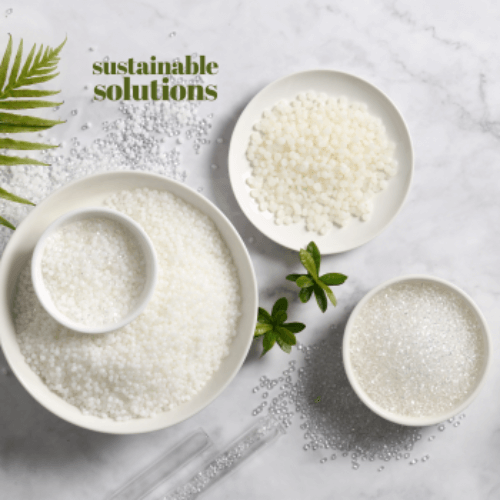
TPU is made from non-food crops, such as straw, grass, bagasse, rice husk, wood chips and other waste materials, through refining, fermentation and synthesis processes using biological, chemical and physical methods. It is environmentally friendly, recyclable and biodegradable. High bio-based content material with environmental benefits can take step toward sustainability.
Anti-hydrolysis agent
CATÉGORIES : Additifs
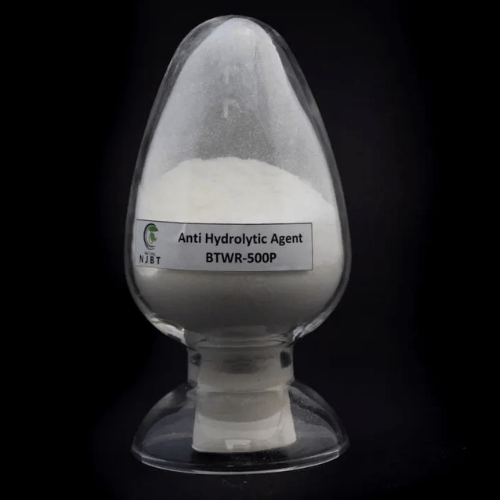
BTCE-9013 is a polymeric epoxy functionalized chain extender. The epoxy functional groups in its structure can react with the terminal carboxyl, hydroxyl, and amino groups in long-chain resin molecules to extend the polymer chain, thereby improving the resin's mechanical properties, intrinsic viscosity, and inhibiting polymer hydrolysis. It can be used in food contact materials. BTCE-9013 is generally co-extruded with modified resins using twin-screw or single-screw extruders. The recommended dosage for bio-based and biodegradable plastics such as polybutylene adipate/terephthalate (PBAT), polylactic acid (PLA), polybutylene succinate (PBS), polymethyl ethylene carbonate (PPC), and polyhydroxyalkanoates (PHAs) is 0.2-0.8 phr. The recommended dosage for condensation-based recycled plastics such as polyamide (PA), polybutylene terephthalate (PBT), polycarbonate (PC), and polyethylene terephthalate (PET) is 0.2-1.5 phr. The specific dosage depends on the number of active functional groups in the resin and the performance requirements of the product.