


 English - EN
  繁體 - ZH-TW
  简体 - ZH-CN
  Español - ES
  日本語 - JA
  العربية - AR
  Русский - RU
  Français - FR
PLASTPOL in Poland to Showcase the Transformation of Europe’s Plastics Industry
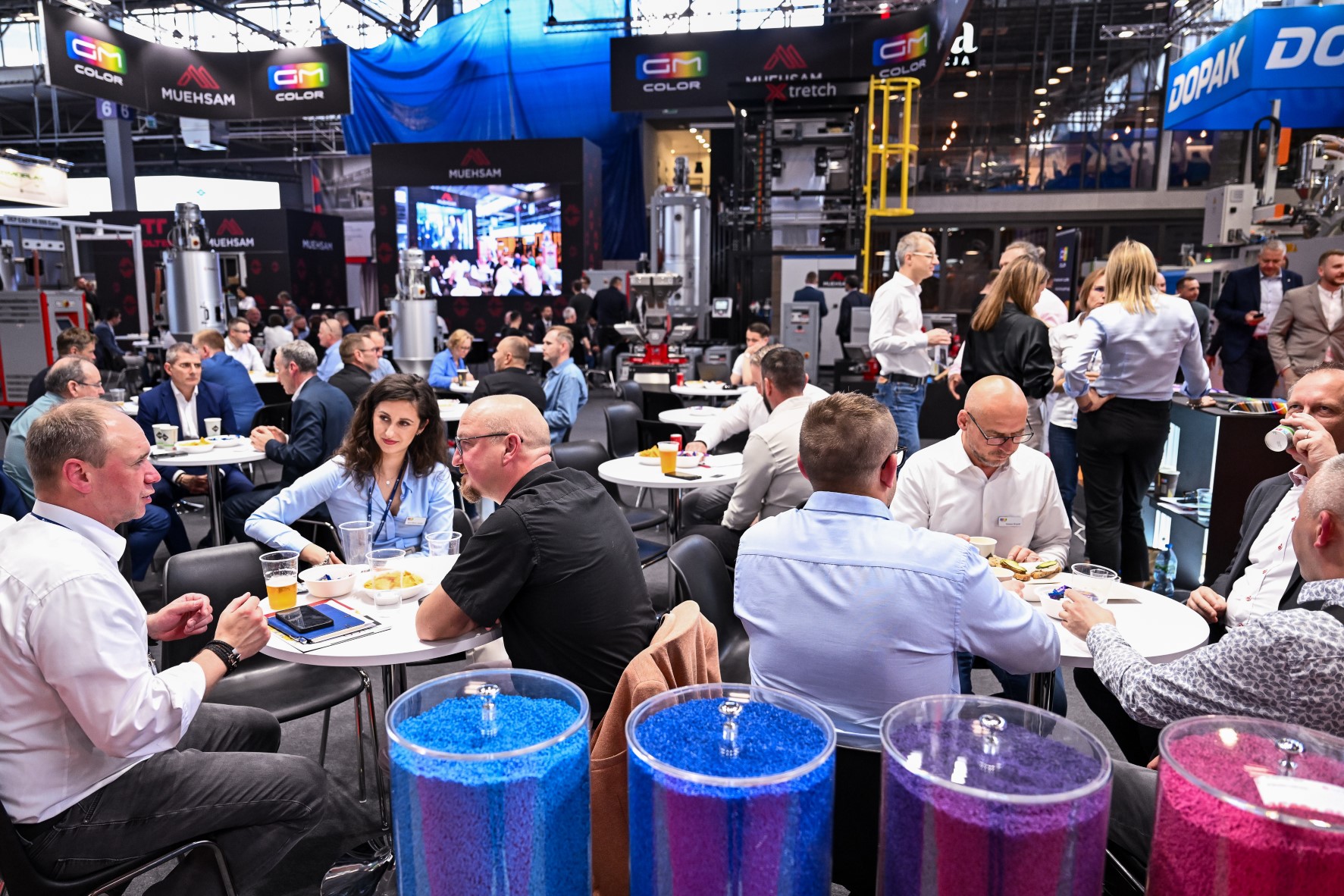
The plastics industry is currently under significant pressure. Rising energy costs, tightening environmental regulations and the rapid development of circular economy models are driving a profound transformation across machinery manufacturing, raw materials and business strategies. Therefore, the 30th anniversary International Fair of Plastics and Rubber Processing in Poland will once again be one of the most important venues for observing the directions of development of modern industry in Europe.
From 19 to 22 May 2026, Targi Kielce will host 600 exhibitors from over 30 countries across Europe, Asia and the Middle East. They will present cutting-edge technologies, materials and production systems to representatives of nearly every industry that uses plastics — from automotive and home appliances to the medical, electronics, construction and defence sectors. The exhibition will be accompanied by conferences and debates dedicated to the future of the industry.
Plastics remain one of the foundations of the modern economy. Without them, sectors such as automotive, medical, electronics, construction, packaging and defence would not be able to develop. For 30 years, PLASTPOL has brought together every link in this market — from raw material and machinery manufacturers to end users across multiple industries. This synergy has made the event the leading platform for the sector in Central and Eastern Europe,” says Andrzej Mochoń, Targi Kielce President, CEO.
Machines Become Digital Production Hubs
Just a few years ago, performance was the key parameter for plastics processing machinery. Today, the industry demands much more: process stability, reduced energy consumption, the ability to process recyclates and full digital integration.
Modern injection moulding machines showcased at PLASTPOL increasingly use artificial intelligence to analyse production parameters in real time. These systems can autonomously adjust process settings, reduce waste and predict quality risks.
Autonomous quality control, predictive maintenance, fully robotised production cells, MES integration and digital energy monitoring are quickly becoming industry standards. Full electrification of machines is also gaining momentum, helping reduce both energy consumption and CO₂ emissions.
PLASTPOL clearly demonstrates how deeply plastics are embedded in the modern economy. Technologies presented at the event are used across nearly all industrial sectors — from packaging and construction to automotive, electronics, medicine, pharmaceuticals, energy and defence. Today’s cars, household appliances, medical devices, energy systems and electronic solutions would not exist without advanced polymer materials.
Smart Production Lines and Advanced Materials
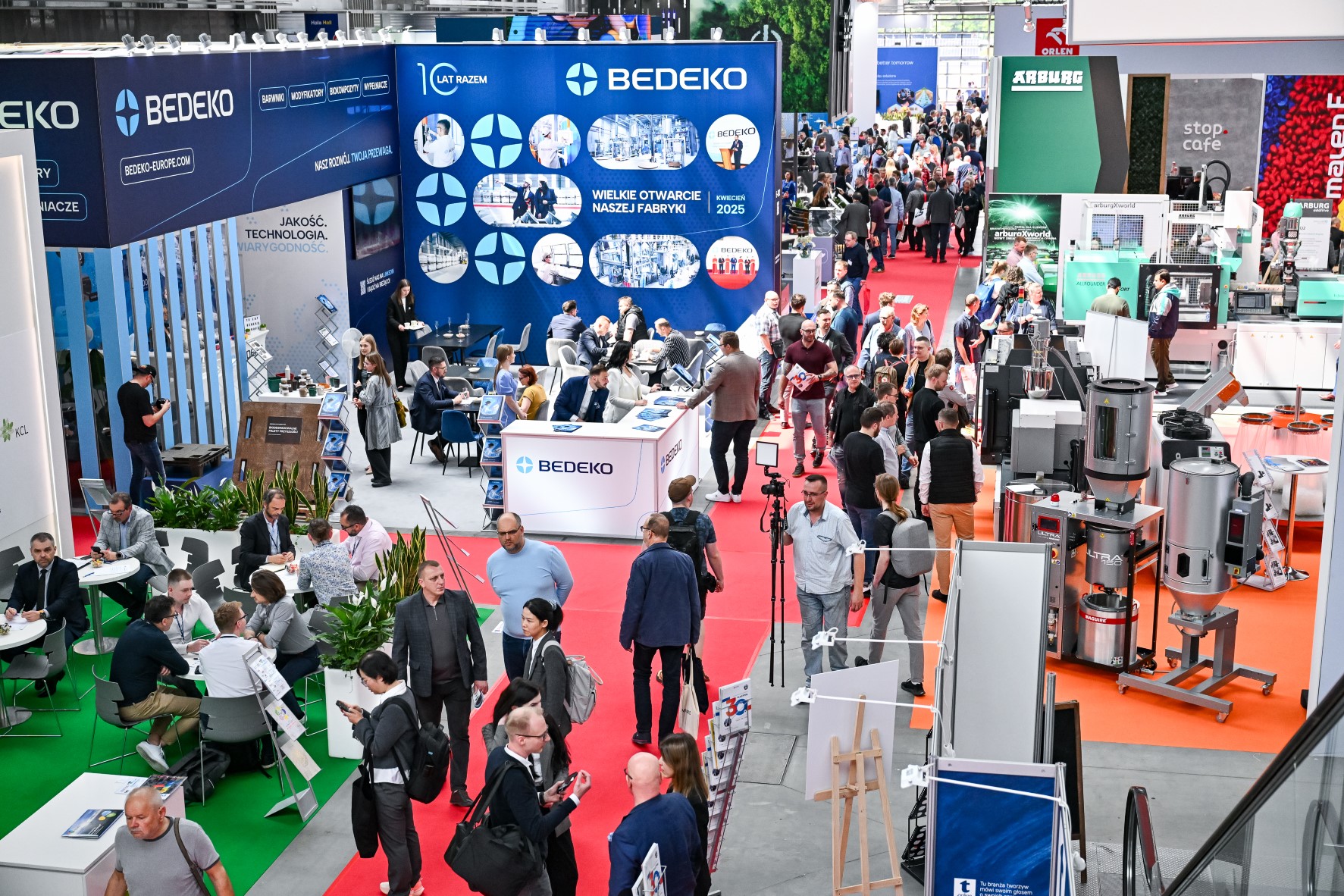
The anniversary Expo will also show how much the plastics processing industry itself is changing. Energy efficiency, automation, recyclate processing and full digitalisation are now at the core of industrial development and manufacturing process. The Targi Kielce expo halls showcase a new generation of fully electric injection moulding machines, intelligent robots and control systems using data analysis and artificial intelligence to automatically optimise operating parameters.
Live demonstrations will include the production of medical autoinjector components, insulin capsules, lunchboxes, technical parts, and micro-injection-moulded elements. One fully automated line will showcase the production of a piggy bank using materials containing natural resources and recyclates. Other solutions will demonstrate cleanroom manufacturing for medical components and intelligent process stabilisation systems that minimise defects and energy consumption.
The industry is also paying increased attention to modern raw materials. PLASTPOL will present next-generation engineering plastics, bio-based materials, fibre-reinforced composites and high-quality recyclates designed for demanding applications. Materials engineered specifically for recyclability and reuse are becoming a major trend, alongside with multi-material solutions, combining different types of materials in one product while maintaining the possibility of material recovery.
Recycling Reshapes the Entire Sector
The strongest trend in the industry remains the shift towards a circular economy. Machinery and materials manufacturers are intensifying efforts to develop technologies that enable the efficient use of recyclates and the stable processing of secondary raw materials.
Among the solutions presented at PLASTPOL will be regranulation systems, material stream purification technologies, intelligent dosing systems and production solutions based on recycled and bio-based materials.
Product design philosophy is also changing — more materials are now created with future recovery, easier recycling and reduced carbon footprint in mind.
According to recent data from Plastics Europe, circular plastics still account for only around 15% of European production, highlighting the scale of the challenge ahead.
A Foundation of the Modern Economy
“The importance of the sector extends far beyond processing itself. Technologies presented at PLASTPOL are used in packaging, automotive, home appliances, electronics, medicine, pharmaceuticals, construction, aviation and defence,” emphasises Kamil Perz.
In the automotive industry, plastics reduce vehicle weight and improve energy efficiency. In medicine, they enable cleanroom production and single-use equipment. In electronics and energy, they form the backbone of insulation systems and components for electromobility. Their role is also growing in the defence sector — from lightweight composites to unmanned systems.
Kielce as a Platform for Strategic Decisions
PLASTPOL continues to evolve while innovation and international reach remain its core strengths — with more than half of exhibitors coming from abroad — the need for strategic dialogue about the future of the industry is becoming increasingly important.
On 18 May, ahead of the exhibition, the Plastics Industry Meeting, organised by the PlasticsEurope Polska Foundation and the Polish Union of Plastics Converters, will focus on competitiveness, regulation and the future of the circular economy.
On the first day of the trade fair, May 19, the report "THE CIRCULAR ECONOMY FOR PLASTICS – A European Overview", prepared by the Plastics Europe Foundation, will be presented for the first time.
- This a comprehensive insight into the data on plastics production and processing, as well as waste collection and processing included. This year, for the first time, the report analyses new data, including trade flows of fossil-based and circular plastics, to provide a more complete picture of material migration in Europe. – says Anna Kozera-Szałkowska, Managing Director of Plastics Europe Polska.
The Circular Plastics Compass Starter session on the same day allows participants to learn about the latest data and trends from the plastics market.
On the second day, May 20, the Plastech Info technical seminar "There is no world without plastics" will be held, devoted to new materials, energy efficiency and integration of production systems.
On the third day, May 21, experts will discuss the PPWR Regulation and new regulations on packaging and waste management, which are already influencing the strategies of plastics producers and processors across Europe.
– PLASTPOL 2026 will showcase an industry in the midst of profound transformation. For the plastics industry, the coming years will be a period of redefinition. And the direction of these changes will be best explored at Targi Kielce – invites Kamil Perz, director of the Plastpol trade fair at Targi Kielce.