

 English - EN
  繁體 - ZH-TW
  简体 - ZH-CN
  Español - ES
  日本語 - JA
  العربية - AR
  Русский - RU
  Français - FR
€1 Million, 90%, 30 Years: Three Numbers That Redrew Asia's Polymer Supply Chain This Week.
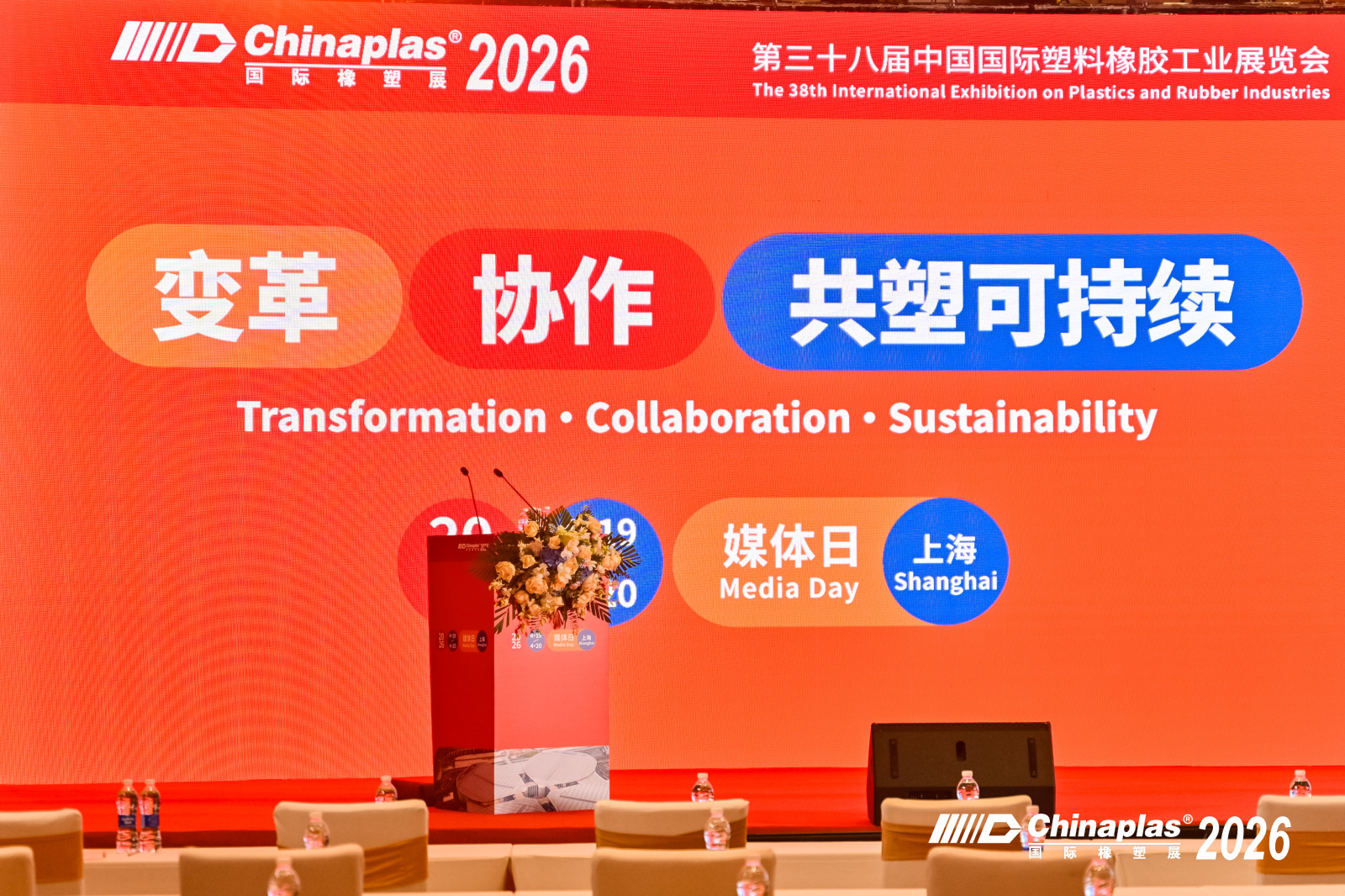
At the CHINAPLAS 2026 Media Day held at the Pullman Shanghai South Hotel on April 19–20, two of the industry's most-watched players — Chinese conglomerate Chambroad Holding Group and German specialty chemicals giant Evonik — laid out their 2026 strategies. On the surface, they are competitors from opposite ends of the world. But listen closely to what they actually presented, and a different story emerges: the value core of Asia's polymer supply chain is shifting from commodity production to high-performance specialty applications — and for the first time, much of that specialty capacity is being built in Asia itself.
For international buyers still sourcing from Asia with a 2018-era mental map, this is the moment to update it.
The Signal Most People Missed: Where Evonik Is Actually Making Things
Evonik's press release talked about "localization" and "commitment to the Chinese market." The standard PR language. But during the media session, Evonik disclosed something far more interesting:
ROHACELL® PMI foam and high-grade PEEK — two of Evonik's most advanced polymers — are now primarily produced in Changchun, China. Germany retains only partial modification work. At the same time, Evonik's second polyamide reactor in Shanghai completed trial production at the end of 2025, doubling Asia's long-chain polyamide capacity.
This is not localization in the marketing sense. This is a structural relocation of specialty polymer manufacturing. Six years ago, if you were sourcing aerospace-grade PMI foam or medical-grade PEEK, the supply chain passed through Germany. Today, a growing share of it originates in Northeast China.
For buyers assembling components in Southeast Asia, this changes lead times, logistics costs, and geopolitical exposure calculations — all at once.
New Battleground #1: Low-Altitude Economy and eVTOL
China's 15th Five-Year Plan has designated the "low-altitude economy" as a priority sector, and Evonik is positioning itself aggressively around eVTOL (electric Vertical Take-Off and Landing) aircraft.
The star material is ROHACELL® PMI foam — a closed-cell structural foam that, by strength-to-weight ratio, outperforms steel. It has been used in aerospace applications for over three decades, which matters: eVTOL manufacturers do not have time to qualify unproven materials. A 30-year airworthiness track record is a decisive commercial advantage.
Complementing this, Evonik presented VESTAMID® L PA12 (grade LX9012) for thermal management systems in low-altitude aircraft — battery cooling lines, power busbars, and high-temperature fluid circuits. The same PA12 family is already embedded in China's EV thermal management supply chain, giving Evonik a natural technology bridge from ground vehicles to air vehicles.
Chambroad is playing a parallel game from the material side. Its subsidiary Ju Fang New Materials unveiled two aramid innovations targeting the same sector: para-aramid nanofibers with a 400°C membrane rupture temperature (for battery separators), and ultra-thin para-aramid paper that reduces weight by more than 20% compared to traditional meta-aramid — specifically aimed at eVTOL structural protection, rail transit, and aerospace.
For international buyers, the read is simple: the materials layer of the global eVTOL supply chain is consolidating in Asia faster than most procurement teams realize.
New Battleground #2: The Full Hydrogen Value Chain
If low-altitude economy is the flashier story, hydrogen is the more consequential one. Evonik presented a rare full-stack solution covering all three phases of the hydrogen economy:
| Stage | Evonik Solution | Performance Claim |
|---|---|---|
| Production | DURAION® anion exchange membranes | Enables efficient green hydrogen electrolysis |
| Purification | SEPURAN® Noble gas separation membranes | Hydrogen recovery rate of over 90% |
| Transport | VESTAMID® NRG PA12 | Purpose-engineered for hydrogen pipeline integrity |
The 90%+ hydrogen recovery figure is worth pausing on. Hydrogen losses during purification and transport are one of the hidden economics problems of the hydrogen transition — every percentage point of recovery changes the LCOH (levelized cost of hydrogen) math. A membrane solution at this performance level, produced at commercial scale, is not a pilot-stage technology.
Chambroad, meanwhile, is approaching the same energy-transition theme from the circular economy angle: its bio-based itaconic ester rubber, made from corn cobs, straw, and end-of-life tires, claims 1.4 tons of CO₂ reduction per ton of product, and is already deployed in tire, footwear, wind energy, and lithium battery applications.
What This Means for International Buyers
Three takeaways international procurement teams should carry out of CHINAPLAS 2026:
1. The "Asia = commodity, Europe = specialty" heuristic is obsolete. Long-chain PA12, PMI foam, PEEK, para-aramid nanofibers — these are all being produced at scale in China in 2026. Treating Asian suppliers as interchangeable commodity sources will lead to missed opportunities at the specialty end.
2. Application-specific sourcing is replacing category-based sourcing. Both Chambroad and Evonik are organizing their 2026 commercial stories around end applications — eVTOL structures, battery separators, hydrogen infrastructure — rather than polymer categories. Buyers who still source by resin type will miss the specialty grades that are now being co-developed with downstream OEMs.