


 English - EN
  繁體 - ZH-TW
  简体 - ZH-CN
  Español - ES
  日本語 - JA
  العربية - AR
  Русский - RU
  Français - FR
Chyi Yang’s Preview for TaipeiPLAS 2026: Built for the Requirement That Hasn't Landed Yet
In the past year alone, the EU's PPWR locked in recycled-content targets for 2030, California's SB 54 became permanent regulation after being rewritten once, and Indonesia set a target to phase out single-use plastics nationwide by the end of 2026. None of these rules looked like this three years ago. None of them are finished moving either.
Regulation is only half of what's shifting. Brand owners change what they ask suppliers for based on their own sustainability commitments, retailer audits, and whatever their end consumers are asking for this season, sometimes faster than any law requires. A buyer who specified a standard barrier film eighteen months ago might ask for a compostable structure instead this year, not because a regulator told them to, but because their biggest retail account did.
Pulled between regulation and market demand, the baseline for what counts as a "safe, standard" packaging spec keeps drifting. A manufacturer that builds a production line around today's snapshot alone is aiming at a target that never stops moving.
Not To Gamble on Which Spec Wins Next
A production line is a long-term commitment made against a short-term picture of the market. Buy a machine locked to one fixed structure, and you're implicitly betting that the regulation and the buyer requests in front of you today still look the same when the line has finally paid for itself. When both keep moving in different directions, making it a hard bet to win. The alternative isn't predicting which rule or which customer moves first. Chyi Yang’s Multi-Layers Co Extrusion Blown Film Machine isn’t tied to a single product: the same line runs a plain agricultural sheet today and a recycled-content film tomorrow, switching what it makes as mainstream demand moves. So your factory can keep meeting market demands without re-tooling every time changes come.
One Maker, From Grocery Bags to Sterile Barriers
What a film has to do changes completely depending on where it ends up, and that's the full spread a converter now has to answer for. At one end sit everyday films that make shopping bags, refuse sacks, shrink film. Where the job is reliable strength and clean output at volume. A step up are food-grade films, where consistency and hygiene become the reason a buyer picks one supplier over another. Then there's the fast-growing "green" film category: everyday products carrying recycled content in the core, hidden between clean outer layers, so a brand can meet the sustainability targets its retail accounts and regulators keep raising without the film's surface or strength giving anything away. And at the far end, medical and high-barrier packaging, where an ultra-thin barrier layer decides whether the contents stay sterile or sealed against oxygen. The film where failure isn't an option.
Chyi Yang Industrial builds a dedicated machine for each of those jobs: a 3-layer line, a 5-layer line, and a 7-layer line, each engineered for its own tier of the market. Not one machine stretched to fake all of them, but three purpose-built machines from a single supplier. For a factory taking on a new application, that means the machine for it comes from a maker whose engineering, service, and spare parts it already knows. Instead of onboarding a new equipment vendor every time the order book moves into new territory.
Electrification: The Difference Between Guessing and Knowing
The optional fully electric HMI upgrade brings the same logic to daily operation. Material feed, power draw, and output show up as figures an operator can act on, not settings adjusted from memory. When a buyer's next request lands, a new structure, a new material ratio, a compliance requirement nobody had specified before. That visibility is what turns "we should be able to do this" into "here's exactly what it costs and how it runs."
PPWR's 2030 recycled-content targets could tighten further before they even take effect. The retail account that didn't ask for a compostable structure last year might require one next year. Either way, the safer position for a manufacturer isn't predicting which rule or which buyer moves first. It's owning a line that never had to.
Choose Your Weapon: Chyi Yang's Multi-Layer Arsenal
Chyi Yang Industrial doesn't ask a factory to jump straight to seven layers before a buyer's request actually calls for it:
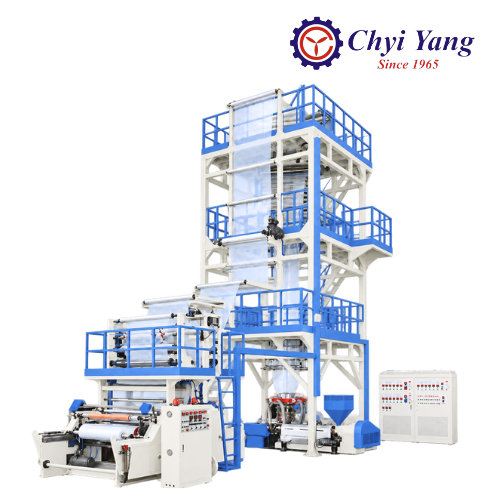
1. The Entry Point: 3-Layer Co-Extrusion Blown Film Machine Built around three independently controlled gearbox-and-motor sets, this covers general packaging, sacks, shrink film, and agricultural sheet in HDPE, LDPE, LLDPE, EVA, MPE, or PP. The platform a factory grows into 5 or 7 layers from once a buyer's spec demands it, not a dead end when it does.
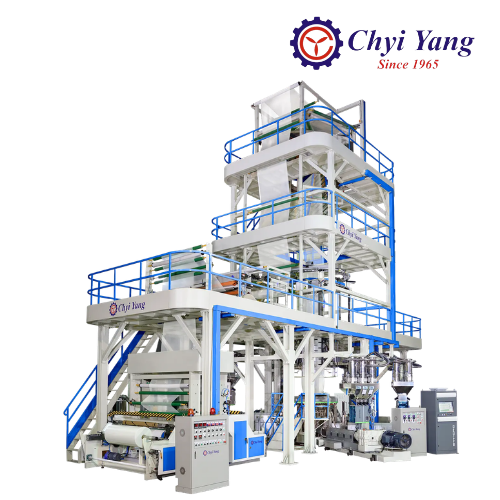
2. The Flexible Middle: 5-Layer Co-Extrusion Blown Film Machine Built for protective wrapping and cling-film-style applications, where the extra layers given strength, puncture resistance, and consistent cling performance the moment a product line expanded beyond a 3-layer machine can provide. An optional waste-film recycling attachment feeds scrap directly back into the screw, cutting material loss on every run.
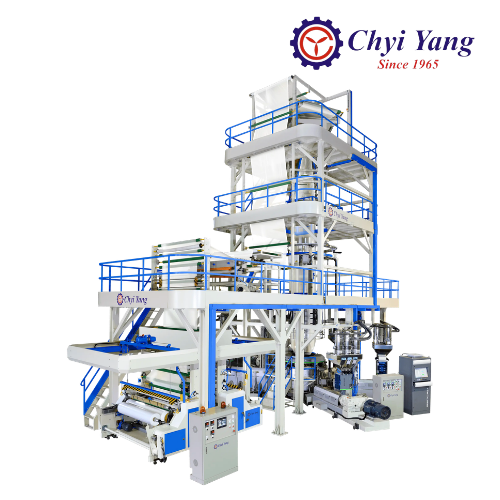
3. The Barrier Specialist: 7-Layer Co-Extrusion Blown Film Machine Seven independently driven gearboxes give the precision needed to build a true barrier structure. The layer count buyers actually need for a film that blocks oxygen and moisture. Thickness variation holds within 3% at 2-sigma, the exact layers for the food, dairy, and medical packaging orders where a buyer's compliance requirement leaves no room for error.
Preview for TaipeiPLAS 2026 (9/15–9/19)
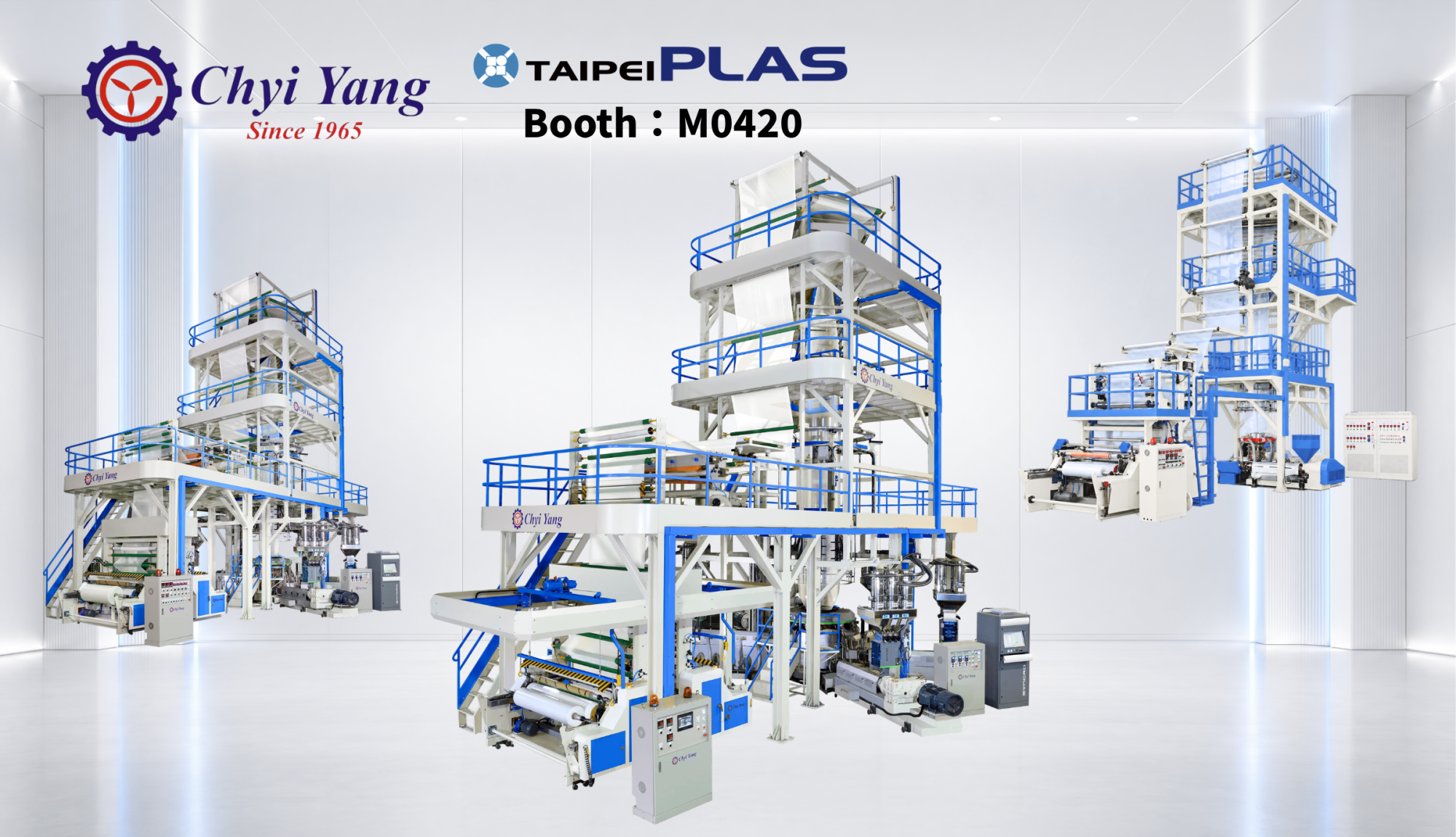
Visit the Chyi Yang booth in Hall 1, M0420 to see the 3/5/7-layer platform switch between structures on the same base machine, alongside its electronic control system in live operation.


PARTENAIRE COOPéRATIF