


 English - EN
  繁體 - ZH-TW
  简体 - ZH-CN
  Español - ES
  日本語 - JA
  العربية - AR
  Русский - RU
  Français - FR
Preventing GPU Failures: TKC’s Advanced Vertical Injection Solution for AI Server Power Harnesses
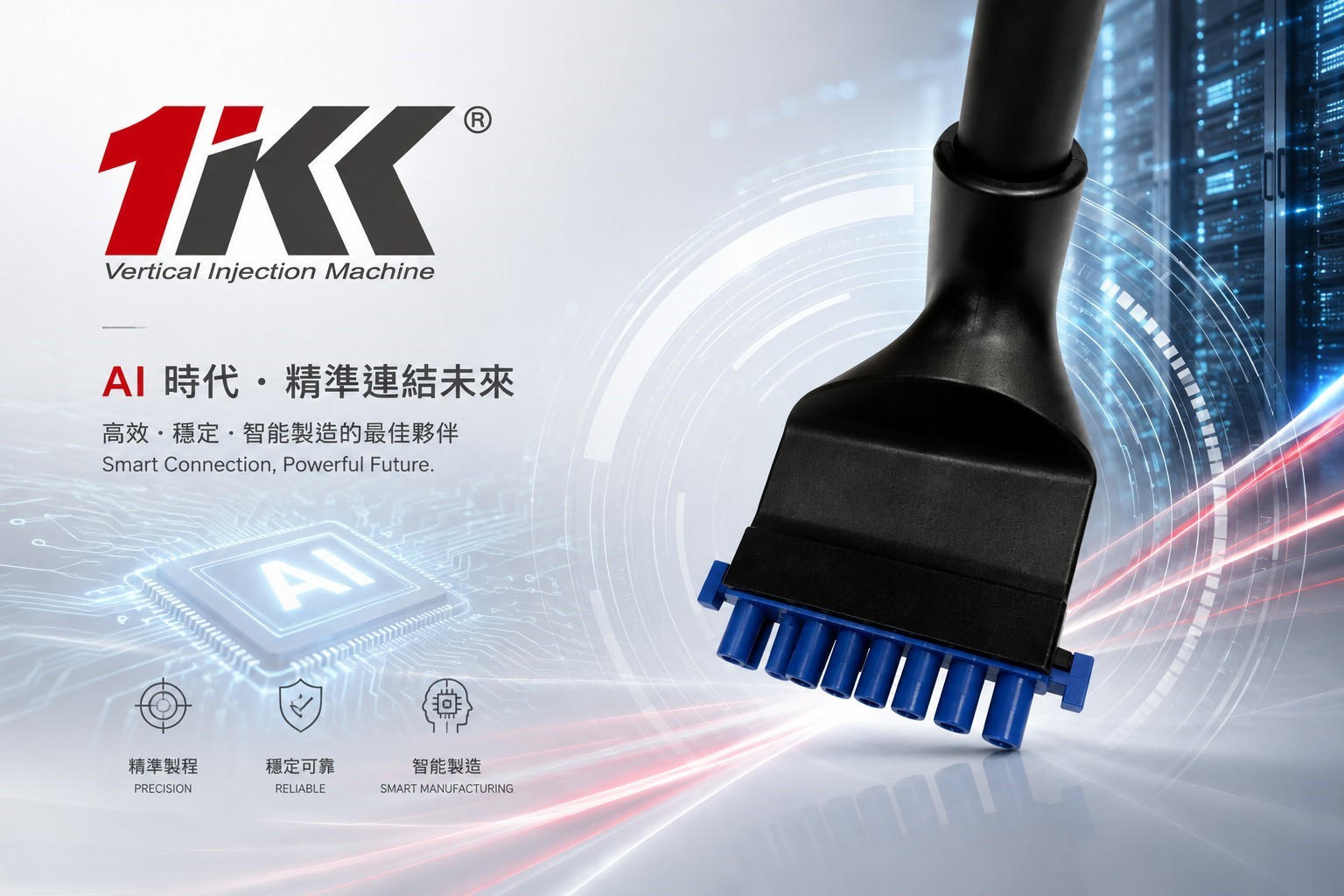
AI server internal power modules typically use between 20 and 80 terminals to connect to power distribution boards. The greater the number of terminals, the more stringent the manufacturing process requirements become.
If a terminal in an AI server power harness is damaged during the insert-molding or crimping process, the consequences can be severe, depending on the terminal type, because the current involved is typically very high—tens of amperes, and in some cases more than 100 A.
Common failure modes include:
(1) Increased contact resistance:
If terminals are deformed or cracked, have damaged plating, or have a reduced contact area:
• Contact resistance increases.
• Localized heating occurs.
• The temperature rises as the electrical load increases.
(2) Current redistribution:
Because multiple terminals are designed to share the current, the remaining terminals must carry a greater portion of the load if one terminal fails.
(3) Momentary power loss:
This may result in:
• GPU boot failure.
• GPU disconnection or loss of communication.
• PCIe errors.
• Interruption of AI training.
• Server reboot.
(4) Arcing:
Arcing may cause:
• Sparks.
• Arc discharge.
• Carbonization.
• Contact erosion.
These effects can further increase contact resistance and accelerate connector deterioration.
(5) Worst-case scenario:
Connector burnout.
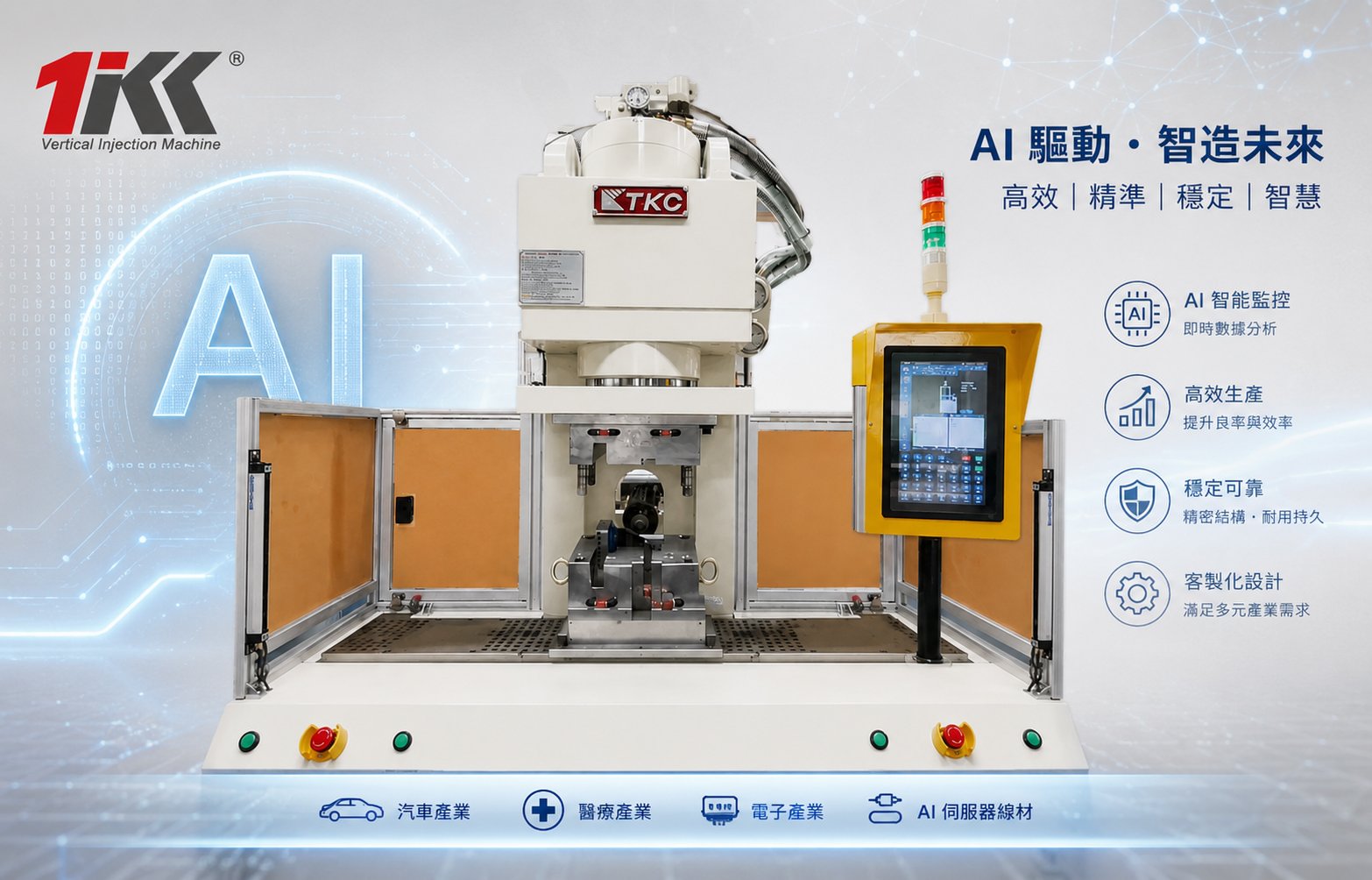
TKC has developed a dedicated vertical injection-molding machine for AI server power harnesses. This equipment can produce both inner and outer molds on a single machine and offers the following features, enabling high-quality and efficient production:
(1) One-touch high-/low-pressure switching:
The machine can be quickly converted from a conventional injection-molding machine into a low-pressure, low-speed encapsulation machine, providing versatile, multi-purpose functionality.
(2) Non-return nozzle with zero injection-pressure loss:
The machine is also equipped with a function that allows it to operate with a conventional open-type nozzle when required.
(3) Customized dual-injection units:
Both the inner and outer molds can be completed on a single machine. Combined with automated transfer capabilities, the system enables one operator to handle more than 200 kg of cable.
TKC (Taiwan) has been manufacturing vertical injection-molding machines for more than 40 years. Leveraging our extensive technical expertise and precision-manufacturing capabilities, we provide customized, semi-automated and fully automated integrated solutions.
We are committed to continuous innovation and research and development to help our customers improve production efficiency and strengthen their competitiveness in the market.
PARTENAIRE COOPéRATIF